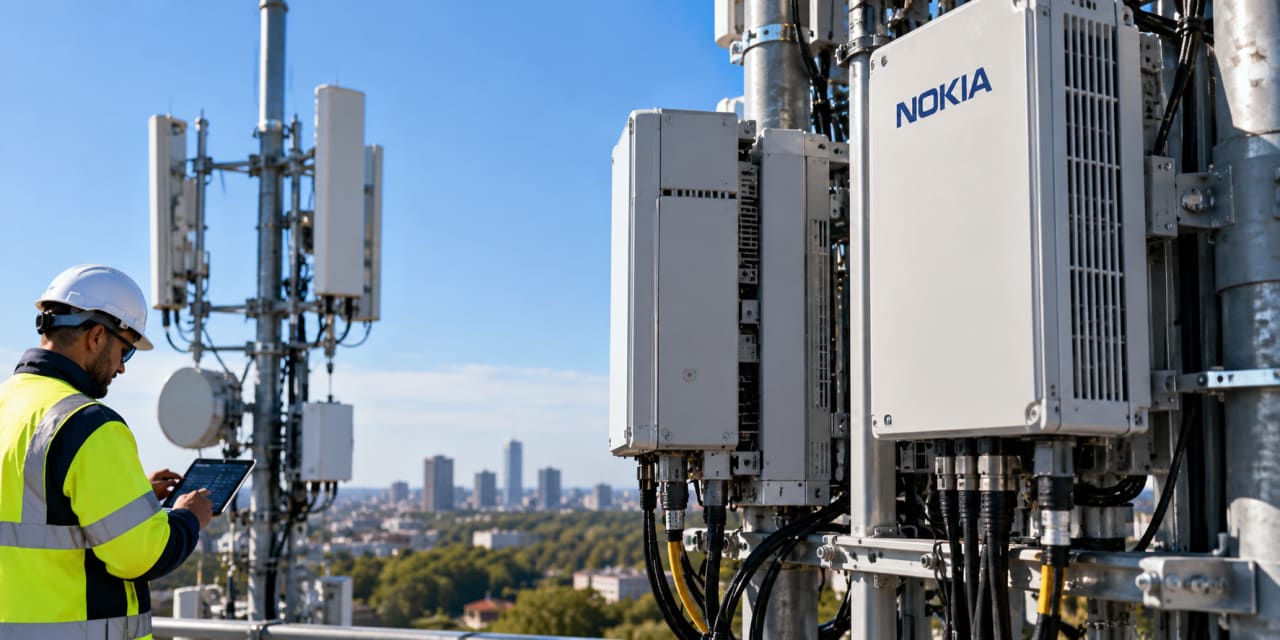

Nokia (NOK) recorded strong Q3 earnings on Thursday, but investors found reasons to sell.
Revenue came in up 10% on a year-over-year basis to €5.154 billion, while comparable operating profit jumped to €605 million – a much better-than-expected 35% increase.
Demand for networking equipment serving AI and cloud customers powered the quarterly growth. Still, Nokia stock is down roughly 10% as of writing.
Why is Nokia stock slipping after Q3 earnings?
The clearest concern that’s driving NOK shares lower is cash generation.
Nokia lowered its full-year free-cash-flow conversion guidance to 45% at the midpoint of its range, citing accelerated restructuring and investment in working capital.
It estimated an additional €400 million commitment to working capital this year – partly to secure supplies for future growth. Expected restructuring charges also increased to €1.1 billion.
This creates a complication for investors: growing accounting profits do not automatically produce more cash available for dividends, acquisitions or reinvestment.
Buying inventory ahead of anticipated orders can protect future revenue, but it also ties up money before customers pay.
The investment case therefore depends on whether today’s spending ends up producing profitable shipments rather than persistent inventory accumulation.
All in all, NOK’s earnings beat strengthens its growth credentials; the cash-flow downgrade raises the price of pursuing that growth.
Should you buy the post-earnings dip in NOK shares?
The bullish argument for Nokia shares rests on tangible customer demand.
Nokia secured €1.5 billion in AI and cloud orders during its fiscal third quarter – while its Network Infrastructure business increased sales 17% year over year.
That division supplies the connections needed to move information through increasingly demanding computing networks.
For investors, Nokia offers exposure to an essential layer of AI infrastructure beyond processors.
Faster computing becomes less useful when networks cannot transport data efficiently, creating an opportunity for suppliers of optical and IP networking equipment.
The attraction is that supply preparation could eventually become a notable competitive advantage: equipment available when customers need it can translate into revenue competitors cannot capture.
Buying the dip makes sense if that advantage ultimately outweighs the cash absorbed in building it.
Importantly, NOK is currently trading at a rather attractive (for an AI beneficiary) 2.3x sales.
What to look for moving forward
The next test is execution. Nokia expects combined Optical and IP Networks sales to grow 25%–30% in 2027.
Its unchanged 2026 comparable operating profit guidance remains €2.1 billion–€2.6 billion, with management expecting a result above the midpoint.
Those expectations give investors “specific milestones” against which to judge the strategy.
Watch whether shipments accelerate, operating efficiency improves, and cash collection follows revenue growth.
Note that NOK stock also pays a dividend yield of 1.96% currently, which makes it even more attractive as a long-term holding.
In conclusion, Nokia merits attention from patient AI investors willing to monitor that transition closely.
The opportunity depends on converting infrastructure demand into durable shareholder returns – and the latest quarter leaves that outcome promising, rather than assured.
The post Nokia stock slides despite AI-fueled earnings beat: buy the dip? appeared first on Invezz