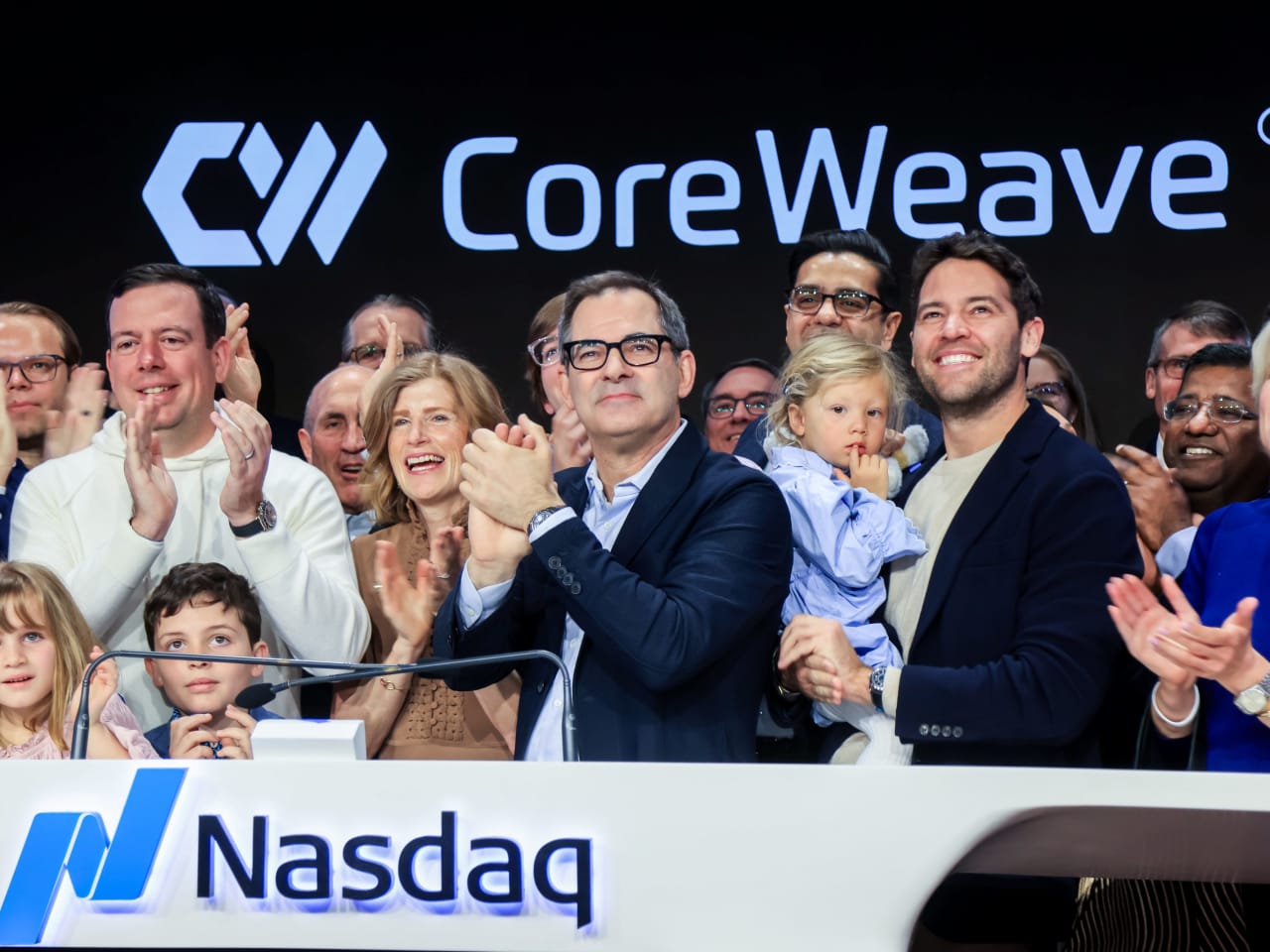

Photographer: Michael Nagle/Bloomberg via Getty Images
Bloomberg/Getty Images
The AI trade has been pummeled in the last couple of weeks.
Thursday’s rout extended a turbulent stretch that kicked off with last week’s panic about CoreWeave.
The vibes in the AI trade are shifting day-by-day as traders digest rates, spending concerns, and macro turmoil.
The AI trade feels like it’s at an inflection point .
Shares of neoclouds like CoreWeave and Nebius have taken a beating over the last couple of weeks, while hyperscalers and chip stocks have been pummeled even as some tech giant report solid earnings and top execs rush to publicly calm markets .
Things had been going swimmingly for the trade as late as the back half of September, thanks in part to excitement about Meta’s Muse AI agent . The market touched its latest all-time high just two weeks ago.
So what’s behind the sudden vibe shift? Several factors have piled up to fuel the latest sell-off:
CoreWeave saw some of its bonds drop to distressed prices , sparking fears about its financing costs that spilled over and pummeled the stock. Shares are down 28% since October 12.
Inflation and oil prices are fueling fears of higher long-end rates, and prompting the Fed to hike short-term rates.
Demand for capital is extremely high, pushing up interest rates.
Higher rates translate to less borrowing, which means less spending on the AI buildout.
Less spending on AI infrastructure means lower earnings than investors had expected for capex beneficiaries — like chip producers and the web of ancillary firms that build and provide systems for data centers.
A slower AI buildout means a potentially longer path to monetization.
Earnings still aren’t delivering the goods the market wants to see. Investors are more concerned than ever that the AI hyperscalers are spending enormous sums with too little to show for it. Meta stock dropped after earnings this week, despite upbeat results and guidance.
In other words, it’s a big mess that’s come to a head in the last week. The jitters around CoreWeave and the neocloud companies even prompted Nvidia CEO Jensen Huang to try and reassure investors about the health of the sector.
“The demand for the neoclouds is off the charts,” Huang told CNBC on Thursday. Nvidia own a stake in CoreWeave.
Nvidia CEO Jensen Huang hyped up the demand for the neocloud companies as investors fled CoreWeave stock in the last week.
Sean Gallup/Getty Images
For CoreWeave and other neoclouds, a shorter runway to have their data center investments pay off has suddenly become apparent to the market, with interest rates rising. That’s according to Dominic Pappalardo, chief multi-asset strategist at Morningstar Wealth.
That’s because higher rates raise their debt obligations and increase the cost of borrowing further, which shortens the cushion they have for their investments to deliver returns.
“The financing costs they have to carry up until they realize those profits is increasing,” Pappalardo said. “So there’s more pressure on them to earn returns sooner.”
Not only is that due to rising borrowing costs, he said, but also because growing competition for capital between governments and other AI spenders has made it harder to secure funding, with investors enticed by nearly risk-free returns in Treasurys, which are offering the highest yields in about 20 years.
Jeff deGraaf, the founder of Renaissance Macro Research, said that a couple of other factors have helped put downward pressure on the AI trade.
One is market technicals. In May and June, he said he saw extreme momentum readings for AI buildout stocks that would not be sustainable for long, implying the trade would reverse at somepoint, especially considering how high valuations and investors’ expectations had climbed.
Another is the Federal Reserve hiking interest rates . All the borrowing and spending on AI infrastructure have helped fuel economic growth and inflation, but have also prompted the Fed to turn more hawkish. The central bank raised interest rates at its September meeting, and is expected to hike once more before the end of the year.
“They raise rates, and that might not matter or seem to matter for non-debt-heavy or even debt issued companies, but it does tend to have an impact at some point in time. And I think that’s exactly what you’re seeing now,” deGraaf said. “The credit markets have kind of found a weak link here with the CoreWeaves of the world and the buildout, and those high rates are having an impact.”
DeGraaf said the sequence of events echoes prior bubbles. Investors become excited about a new technology and expectations and stock prices surge, then rates move higher and the credit picture deteriorates.
“That’s a pretty well-trotted-out playbook,” he said.
Read the original article on Business Insider


