
What do you do when you think your company’s technology may fundamentally alter the fabric of the economy—or rend it apart entirely?
Anthropic , which is widely rumored to be approaching a record-setting IPO , apparently has an answer: Cut the public in on a piece of whatever comes next.
Last week, the company announced that it would dedicate 5% of its shares to a company-owned public benefit trust .
If Anthropic’s products are as lucrative as its sky-high valuation suggests, those shares could be worth billions on day one—and could grow to be worth hundreds of billions over time.
By my calculations, if Google had done the same thing before its 2004 IPO, the shares it set aside for the good of humanity would be worth $184 billion today.
So Anthropic’s plan is a bold one. Depending on where you sit, you’ll likely see it either as a genuine effort to give back to the world, or an attempt to shake regulators off the company’s back—or stop pitchfork-wielding mobs from storming its lovely new office building in SoMA if things get really bad.
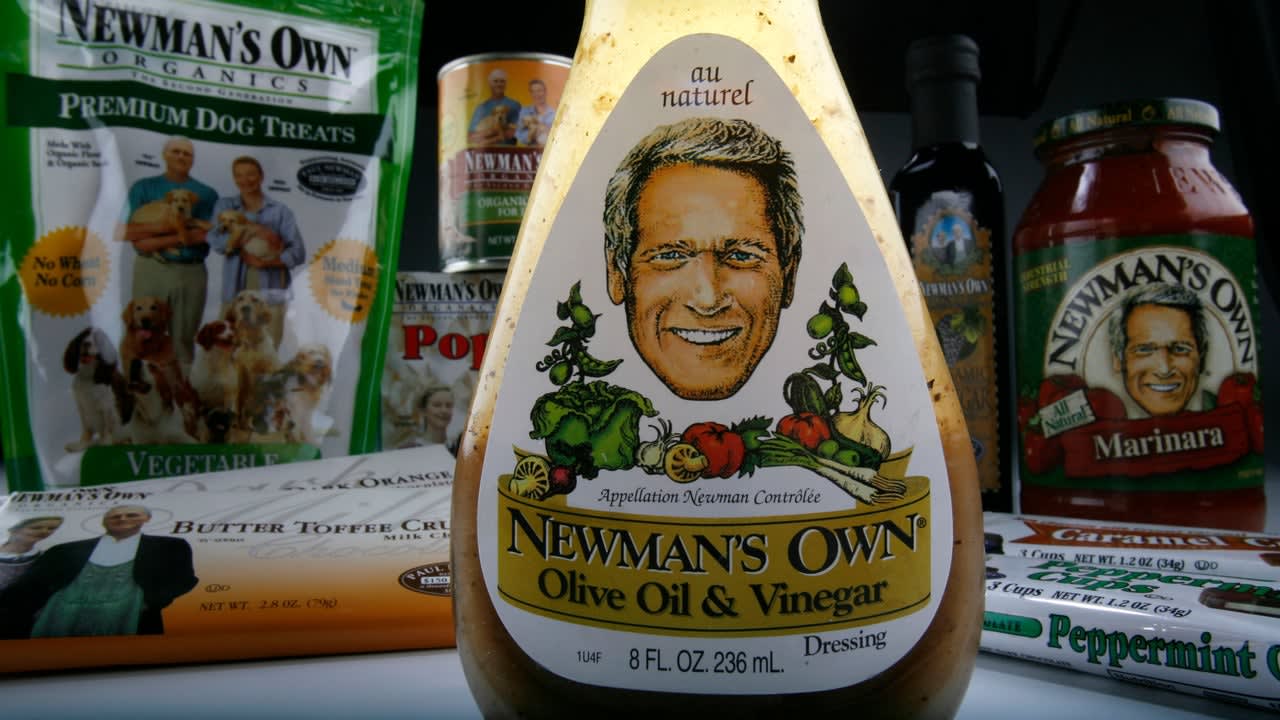
And though the scale is unprecedented, it’s not a new idea. In fact, Anthropic was beaten to the punch by a movie star turned salad dressing tycoon.
Yet Anthropic’s approach has far more concerning implications.
Exploiting Yourself
By age 57, actor Paul Newman was doing pretty well for himself . He had starred in almost 50 movies—including classics like Cool Hand Luke and Butch Cassidy and the Sundance Kid —and was on the path to an eventual Oscar.
Somehow, he’d also managed to find the time to win second place in the grueling 24 Hours of Le Mans auto race, among other wild and wonderful accomplishments.
When someone suggested he slap his iconic blue-eyed visage on bottles of salad dressing to boost sales, Newman apparently thought , Are you crazy?
He said the idea felt like “exploitation.” But then Newman realized that Hollywood had always been exploiting him for his good looks and boyish, all-American charm. Why not do it for a good cause?
And why not do it as fully as possible? In Newman’s words, “Why not, really, go to the fullest length, and the silliest length, in exploiting yourself, and turn the proceeds back to the community?”
So that’s what he did. At nearly 60 years old, he launched Newman’s Own—a salad dressing company that would donate 100% of its proceeds to charity. The company eventually expanded, putting his name and likeness on tons of other products in the same act of “exploitation.”
Today, as any Whole Foods shopper can attest, Newman’s Own still exists (and makes some pretty respectable salsa).
More importantly, the idea worked. The company has reportedly generated over $600 million in charitable donations since Newman founded it in 1982—a massive sum for a company the actor started “on a bit of a lark.”
Altruism, Full Circle
At the time, Newman seems to have been mostly messing around. It’s unlikely that he knew his company would prove so successful in its charitable mission.
But a far more concrete version of the philosophy Newman intuited now drives the actions of companies like Anthropic.
Newman called it “shameless exploitation in pursuit of the common good.” Today, we call it effective altruism. As The New York Times explored earlier this year , it’s a mindset that’s absolutely pervasive in the world of frontier AI .
The idea is essentially to amass as much wealth and power as possible, with the goal of giving it all away, or otherwise turning your influence to the good of humanity.
It sounds nice on paper. But the philosophy, as practiced nowadays, can have a dark side, as when it allegedly drove “crypto king” Sam Bankman-Fried to defraud his way to riches , the better to give them to causes of his choosing.
It could easily have a dark side in the AI world, too—with potentially far graver consequences.
Even if Anthropic gave away all its shares à la Newman, the drive to make those shares as valuable as possible for humanity could motivate the company to scrimp on safety or to callously build things that, by its own admission, risk destroying the world.
Anthropic’s desire to share some of its massive wealth is probably a good one. But as the humans stuck holding the bag if AI goes horribly wrong, we shouldn’t let Anthropic’s gesture blind us to the much bigger questions of AI safety, creative rights, and societal impacts that still surround its work.
It’s a good thing for the powerful and influential to consider their impact on the world. But Anthropic should take a page from Newman’s book and remember that altruism isn’t just about money, nor do the positive ends always justify the means.
There’s not much point in setting aside cash to help humans, for example, if your technology has inadvertently stamped them out.