
For most of history, holiday shopping came with an unspoken rule: Never give someone a used present. A preowned gift seemed cheap, or worse, thoughtless. But that taboo seems to be falling away.
For most of its 17-year history, ThredUp, which bills itself as the world’s largest online thrift store, saw a dip in sales over the holidays, in contrast to most retailers, who wait for the glut of holiday shopping to finally turn a profit for the year. “We were the inverse of traditional retail,” says Alon Rotem, ThredUp’s chief strategy officer.
Lately, though, ThredUp has noticed a shift. Its holiday sales are now growing faster than its sales during the rest of the year. Between 2023 and 2025, the number of items ThredUp sold during the holiday season grew 37%, compared with 22% for the full year.
To understand the trend, ThredUp commissioned a GlobalData survey of more than 2,000 U.S. adults. It found that 62% of Americans plan to buy at least one secondhand item this holiday season. More than 70% say they’re open to giving or receiving a preowned gift. And 55% would rather unwrap a one-of-a-kind vintage or hard-to-find secondhand item in excellent condition, than a brand-new one that’s been mass produced.
Secondhand is a Boon in a Tough Economy
This embrace of secondhand comes as many Americans feel financially stretched after years of high inflation.
Holiday spending did rise last year, by 4.1%, according to the National Retail Federation . But many shoppers say their money didn’t go as far as they wanted. In ThredUp’s survey, 38% said they didn’t buy something for themselves, and 37% spent less on a gift than they’d hoped.
Even so, 84% of Americans expect to spend at least as much this year as they did last year. Of course, what people say in surveys isn’t always what they do. Spending intentions can shift once they enter the store. But many shoppers say they plan to lean on secondhand to stretch their budgets. Fully 78% of millennials and 70% of Gen Z plan to buy at least one secondhand item this season—saying that it costs less, allows them to afford better quality, and makes their budget go further. In addition, 30% of respondents said they hoped to buy gifts for more people, 29% said they could get their preferred gift, and 20% said they could buy something for themselves.
Gifts aren’t the only expense around the holidays. There are also parties. A third of Americans want something new to wear to holiday events, and that rises to about half of Gen Z. Last year, 16% of people skipped an event they wanted to attend for lack of something to wear. There’s a bigger conversation to be had about the pressure to wear a new outfit to every event. But for some shoppers, secondhand offers a practical solution: an outfit that’s new to them, and that their friends haven’t seen before.
[Photo: ThredUp]
The Rebranding of Secondhand
The growing acceptance of secondhand gifts reflects years of work by the resale industry to rebrand itself. You can see it in the language: “Used” and “thrifted” have largely given way to terms like “vintage,” “resale,” and “preowned.”
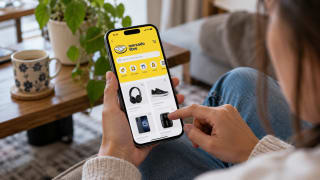
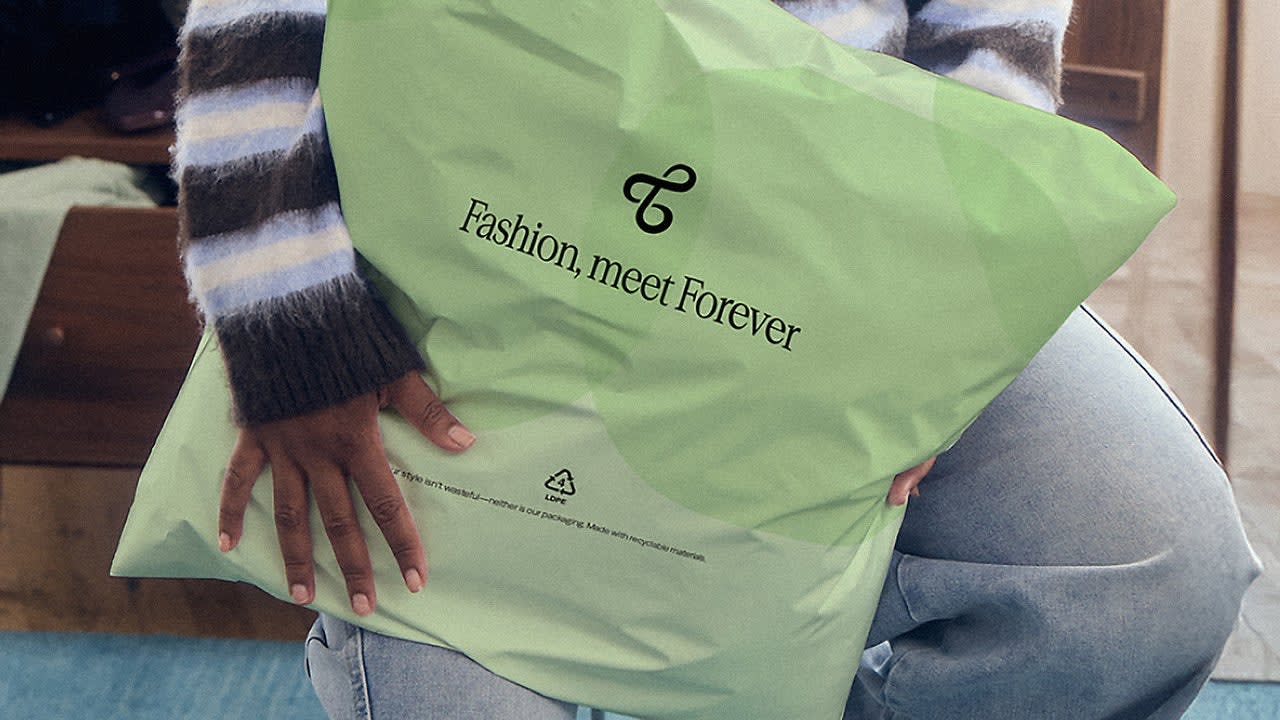
Fifteen years ago, buying secondhand meant rummaging through crowded racks at the Salvation Army, searching for for gems among stained, musty clothes. Resale platforms like ThredUp and The Real Real have worked hard to change that. Their websites look like those of other fashion retailers, with polished imagery that highlights popular brands. Even the unboxing process feels elevated, with clothes wrapped in tissue paper.
It’s also easier to find exactly what you want. Patagonia , Hanna Andersson , Eileen Fisher , and more, have their own resale sites. ThredUp has invested heavily in AI tools that let shoppers upload a photo to find similar items or describe what they’re looking for in natural language,
Millennials have been crucial to destigmatizing secondhand. They were raised in a world where thrifting was still vaguely embarrassing, but they changed their minds as the resale sector transformed. Gen Z and Gen Alpha never even experienced the taboo in the first place. They see secondhand as just another place to buy clothes. “Buying secondhand used to be a virtue signal,” says ThredUp’s Rotem. “It’s not anymore. It’s just another way to shop.”
[Photo: ThredUp]
What Comes Next
That’s good news for the resale industry, but it raises questions for the broader sustainability movement. The first wave of eco-friendly brands asked shoppers to pay a premium, and brands like Allbirds and Everlane struggled to make that model work at scale. Sustainable companies now realize they need to offer consumers more than an ethical backstory. They need to offer good value, better prices, and taste.
So how does the fashion industry keep curbing overconsumption if most shoppers aren’t thinking about the planet? Rotem believes that one answer is to keep pushing circularity. Many young shoppers aren’t motivated by their environmental impact, he notes, but they see their clothes as assets they can resell. As a result, they are more conscious about what they buy and avoid sending their clothes to landfill. The effect is more sustainable, even if that isn’t their goal.
The rest, he argues, has to come from policy: laws that push manufacturers to design recyclable products, embed digital passports into products to make them more traceable, and pay for the waste they create. “If we internalize the externality and make them financially responsible for it,” he says, “they’re going to produce less.”
In the meantime, holiday shoppers are doing their part, whether they mean to or not. “If consumers don’t have sustainability at the front of their mind, but they’re behaving in circular ways,” Rotem says, “we’re halfway there.”