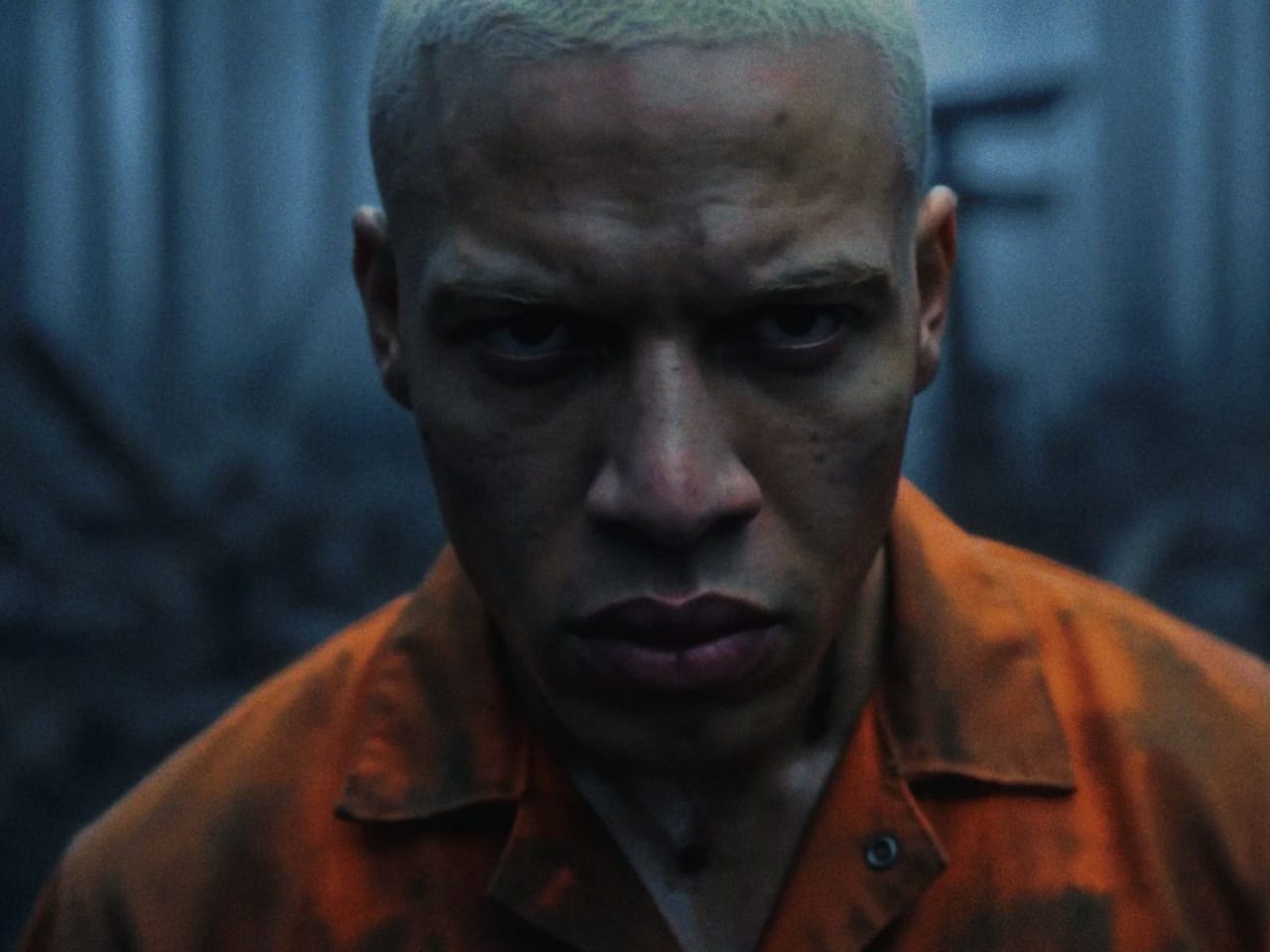

“The Arc,” a 5-episode sci-fi series with a runtime of about 83 minutes, was made with AI-generated video.
“The Arc”
Creators behind an AI-generated TV series said they spent about $38,000 in AI credits making it.
The series runs about 83 minutes in total and was made with tools like Seedance and Kling.
The filmmakers said AI freed them from the typical budget constraints in traditional productions.
When the filmmakers behind “The Arc” got approval to create a short narrative series, they didn’t yet have a concept. Still, three and a half weeks later, they turned in the final cut of the first episode.
That’s because the series was AI-generated . It required no human actors, no sets, and no props or costumes.
The five-episode sci-fi action series was directed by Darin Stewart and executive produced by Simone Ferretti, an AI content creator. The series, which totals about 83 minutes of runtime, was made with and greenlit by Artlist, an AI platform for video content creators . It takes place in a near-future America and follows an incarcerated veteran who must fight his way through deadly historical simulations in order to buy a cure for his dying son. It’s available to watch for free on Artlist’s website.
The filmmakers said the series was made with a small production team and roughly $38,000 in AI credits supplied by Artlist, a subscription platform that gives users access to multiple AI image and video generators in one place.
“The Arc” spans multiple time periods and settings that would typically require large budgets to pull off.
“We’ve never been given the budget or opportunity to go to Japan and film a battle scene,” Stewart said of his production team, all of whom came from traditional entertainment. With AI, he said, they could produce scenes in 1600s Japan and 1800s Montana without the usual budget constraints.
Director Darin Stewart and executive producer Simone Ferretti said they turned in the first episode of “The Arc” in three and a half weeks.
Randy Shropshire for TheWrap
Stewart said “human ideation was top to bottom” and that the team developed the storyline, characters, and settings.
For each episode, the team would do a 10-minute verbal brain dump outlining what happens, specific dialogue, and desired camera movements. They’d use that as a prompt for Anthropic’s Claude and, within a few minutes, would have a workable script they would then edit.
They used ShotDeck, an online library of images from movies and shows, and Figma, a design platform, to make character sheets and mood boards. Stewart said the process was “pretty similar to traditional production.” They also used tools such as Google’s Nano Banana Pro and GPT Image 2 to generate images.
A dining room in episode five had floors that glowed white, a detail directly inspired by the luminous floors in the 1968 film “2001: A Space Odyssey.” The team also specified the objects they wanted in the room, such as a particular stone statue or the paintings that lined the walls. They used Claude as a research assistant to determine what paintings would make sense for the character to have.
“The level of detail is the same level of detail that we would do if we were physically on set,” Stewart said.
The series has scenes that take place in Montana in the 1800s and Japan in the 1600s.
“The Arc”
Once the details were worked out, the scenes were generated primarily using Seedance and Kling, AI video generation models. They averaged about $7,600 in AI credits per episode, with episodes ranging from 10 to 22 minutes.
Stewart said that one shot could require eight to 10 generations, and that they used the credits carefully by doing the initial generations at a lower resolution and only increasing the output quality once they had their desired result.
The impact of AI on Hollywood
AI in filmmaking has become a flash point in Hollywood , where some view the technology as a threat to jobs in an industry where many are already struggling to find work. Last year, actors’ union SAG-AFTRA condemned Tilly Norwood, an AI-generated character branded as an actor, warning that AI performers threaten actors’ livelihoods and devalue human artistry.
Still, some industry giants are embracing it. Netflix co-CEO Ted Sarandos said on a July earnings call that roughly 300 of its titles used AI at some point in their workflow.
The filmmakers mostly used Seedance for video generation.
“The Arc”
Ferretti said creators and filmmakers have so many stories they’d like to tell but lack the money or connections to get them made. AI could make it so more of those stories get told, he said.
He also said AI gives filmmakers more chances to experiment and follow their creative impulses. On “The Arc,” AI made it possible to kill off a character they hadn’t originally planned to kill because, unlike a traditional production, doing so didn’t require reshoots on the other side of the world.
With a greater budget, Stewart said they would’ve hired more people to work on various parts of the production, adding, “Everyone on our team got paid their full day rates the same way they would on set.”
He also said that while he missed the camaraderie of being on set, the experience of producing a series with AI was exciting because of what the technology allowed him to do with fewer resources.
“For someone who’s always wanted to make films and shows and tell stories, it’s just the best feeling ever,” he said.
The series has had in-person screenings in London and Los Angeles, and the filmmakers are working on getting it in front of more audiences.
Stewart said he wants to get to a place with AI filmmaking where “mass consumers appreciate the art and the story and don’t care exactly how it was made.”
Read the original article on Business Insider