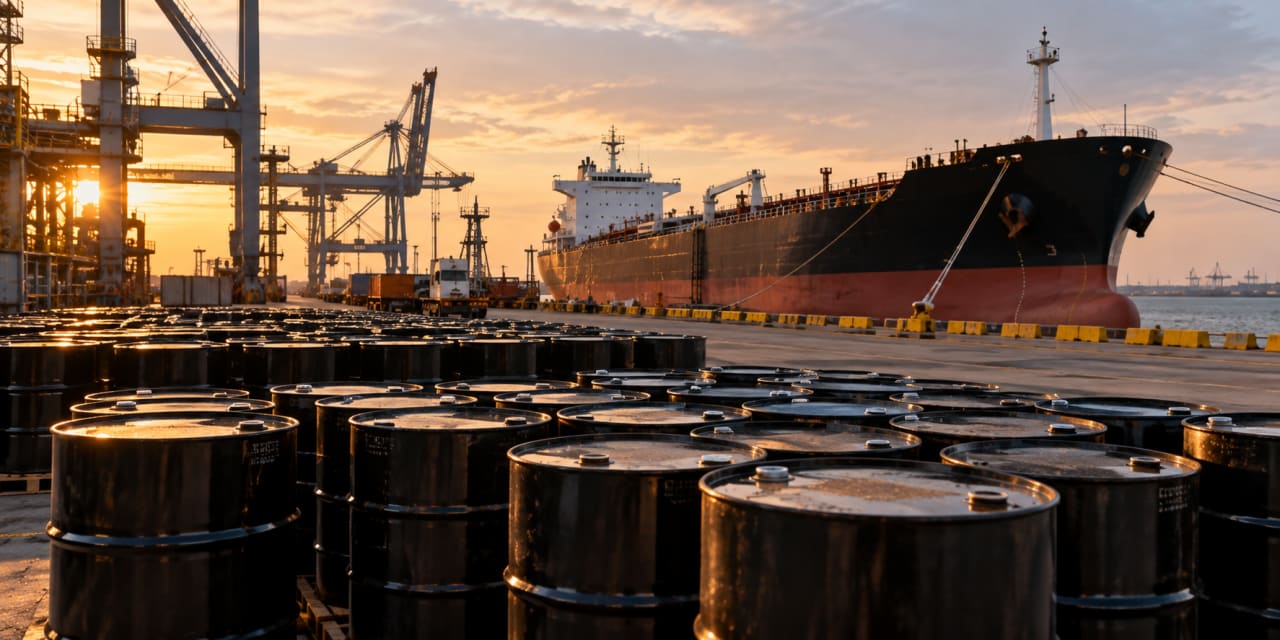

Oil prices fell on Monday even as fresh tanker attacks around the Strait of Hormuz underscored fragile Middle East supply routes.
Brent crude dropped 1.47% to $103.18 a barrel by 0154 GMT, while West Texas Intermediate fell 1.68% to $90.31.
Traders focused on President Donald Trump’s announcement of a Russia-Ukraine energy ceasefire and a deal that could send more Russian diesel into global markets.
Trump gives traders a reason to price in more Russian supply
Trump said Russia and Ukraine had agreed to stop attacks on each other’s energy facilities after Washington reached a diesel-supply deal with Moscow.
Under Trump’s arrangement, Russia would immediately supply more than 300,000 metric tons of diesel to US and global markets, followed by another 500,000 tons in November and a further 1 million tons afterwards. ICE gasoil futures fell about 3% alongside crude.
That was enough for traders to remove the scarcity premium before the ceasefire was proven.
KCM Trade chief analyst Tim Waterer told Reuters that the announcements had eased some immediate supply pressure, but warned that “questions remain over the validity and longevity of any such ceasefire”.
Ukraine’s Volodymyr Zelenskiy said he was still waiting for details, while Moscow had not publicly confirmed the agreement. Russian attacks on Ukrainian energy infrastructure also continued after Trump’s announcement.
Tankers are still being attacked and logistics remain stretched
A tanker was struck by a drone near the Sohar anchorage in Oman over the weekend, while another vessel was damaged by an unknown projectile while transiting Hormuz, according to UK Maritime Trade Operations.
Tanker attacks around the strait had already reached their highest weekly level since the Iran war began.
Energy Aspects founder Amrita Sen argued last week that futures were understating those disruptions. “I find it fascinating that the market is happy to ignore events on the ground,” she told CNBC, pointing to infrastructure damage, disrupted shipping and an unusually severe tanker shortage.
Sen argued that some physical crude should effectively be valued much closer to $150 a barrel once delivery constraints are considered.
Brent can fall on diplomacy, but ships decide whether it stays down
Middle East exports have recovered from the worst of the conflict, yet moving those barrels remains exceptionally expensive.
As per market data, the tanker rates from the Middle East to Asia recently exceeded $1.2 million per day, compared with roughly $30,000 in January. Freight that once represented around 3% of a delivered barrel now accounts for roughly 27%.
Those costs help explain why Brent remains above $100 even as export volumes recover.
Stephen Innes wrote at Investing.com that “the oil market will trust the traffic data more than the political promises” until ships move through Hormuz in something approaching normal numbers.
The post Why are oil prices suddenly falling despite fresh attacks on Middle East tankers? appeared first on Invezz