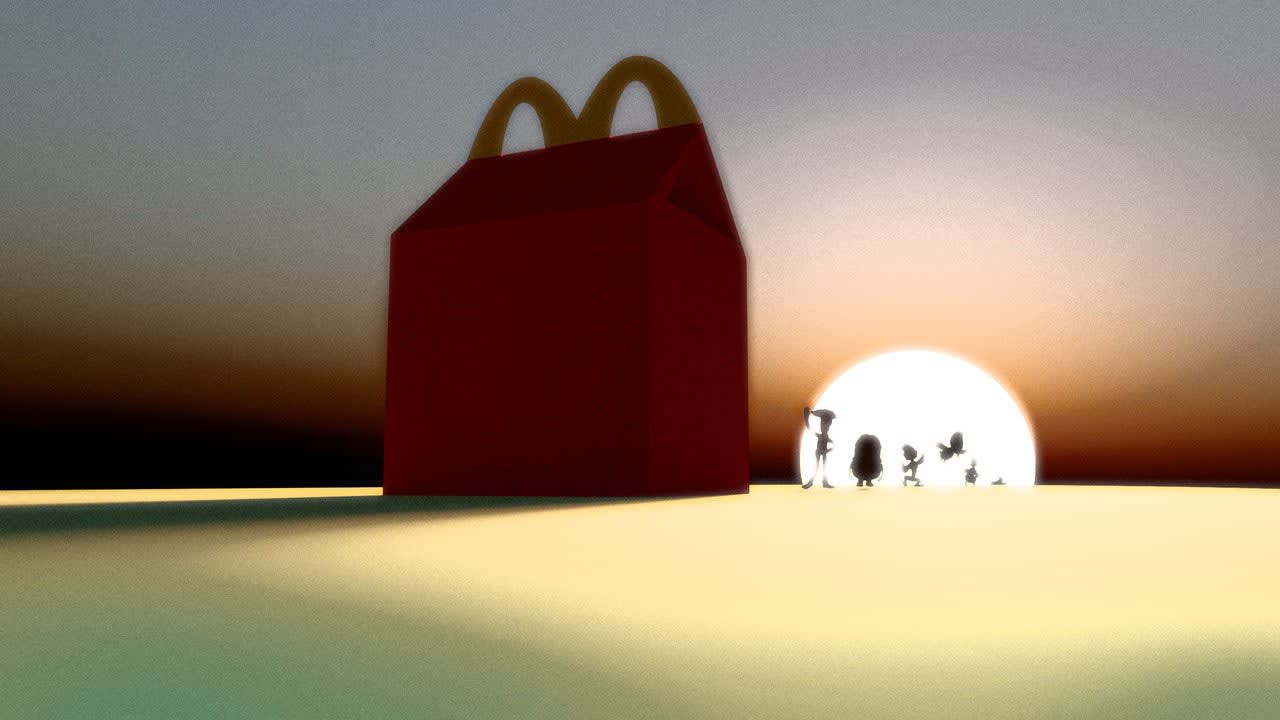

This past March, McDonald’s finally gave KPop Demon Hunters the kids’-meal treatment it was practically begging for. The movie, an animated musical about a K-pop girl group, Huntr/X, and a charming demonic boy band, the Saja Boys, had become the most-watched film in Netflix history, captivating even skeptical parents who found themselves watching it dozens of times.
Instead of a cheeseburger and apple slices, fans could choose the Saja Boys Breakfast Meal, with a spicy McMuffin, hash browns, and soda, or the Huntr/X Meal, with McNuggets, Ramyeon McShaker Fries, and purple Demon Sauce. Their selection corresponded to a vote in McDonald’s “Battle for the Fans.” The prize inside was a pack of collectible photocards and a QR code that would later unlock an exclusive video revealing the winner. (Huntr/X, thankfully.)
Analysts estimated that KPop Demon Hunters Meals could bring in $100 million in their first few days. Some fans, though, were confused. “No KPDH Happy Meal toys???” one asked online. But McDonald’s had put it right there in the announcement : These were “dueling adult meals”—a promotion for grownups. (Honestly, the spicy McMuffin or the QR code should’ve been the tell.)
In the nearly 50 years since the burger giant debuted its first Happy Meals (circus wagon-themed boxes featuring McDoodler stencils, McWrist wallets, and McDonaldland character erasers), the kids’-meal offering has expanded through fast food and beyond, with the prizes inside going from physical trinkets to augmented reality portals and hologram cards. Along the way, the value proposition has evolved too. Gen Alpha is ordering more kids’ meals than ever, but according to the market research firm Circana, they’re increasingly taking their business from drive-through burger chains to chicken chains like Chick-fil-A and restaurants with more adventurous menus, like Chipotle.
Meanwhile, adults, squeezed by increasing prices and squeezing their own stomachs with GLP-1s, have started ordering a lot of kids’ meals for themselves. Call it a role reversal. If it was a movie tie-in, it would obviously have to be Freaky Friday .
The McDonald’s KPop Demon Hunters meals. [Photo: McDonald’s]
Surprise inside
Why would McDonald’s build an adult meal around KPop Demon Hunters —essentially Gen Alpha’s Frozen— instead of making it a Happy Meal? The answer is that the kids’ meal has morphed into a value hack, a light meal, a nostalgia trip, and a collector’s drop, none of which mean much to an actual kid.
The kids’ meal emerged in the ’70s, after fast-food marketers discovered that children drove a surprising share of sales. Yolanda Fernández de Cofiño, a McDonald’s franchisee who had just opened the first location in Guatemala, noticed in 1974 that children were not finishing their food, and created a special “Menú Ronald” for them that drew crowds. McDonald’s had a U.S. version in regional tests three years later. Wendy’s and Burger King followed, packaging kid portions and toys into decorated boxes.
[Photo: McDonald’s]
Back then, kids rarely expected new toys unless it was Christmas or a birthday, says Gary Cross, a Penn State historian of consumer culture whose books include Kids’ Stuff and The Cute and the Cool . Free kids’-meal prizes turned getting one into an any-day event. Soon the prizes were tied to popular movie franchises and toy brands, a strategy “to sell two products at once and use one product to advertise the other,” he says.
The toys began as disposable trinkets meant to keep kids busy. Even McDonald’s had underestimated their potential, betting that cartoons and puzzles on box flaps would sell the meal. “Once they realized it was the prize kids were after, they course-corrected fast,” says Jonathan Alexandratos, a toy scholar and author of Free With Every Kids’ Meal , a book about how toys became a fixture of the meal. What customers really buy with a kids’ meal, Alexandratos argues, is “access to a trend and FOMO satiation,” which means chains can never stop reinventing the prize: “All you can do is evolve as your consumers do.”
In the ’80s, Wendy’s more than quadrupled its kids’-meal toy budget after seeing a survey about how many parents—83%—said their kids help decide where the family eats. “We give them puzzles, games and toys,” the then-spokesperson, Denny Lynch, remarked. “And oh, by the way, you also have a good hamburger, fries, and a drink.” By 1988, the strategy was so widely adopted that a Wall Street analyst complained to Newsweek : “The food business has become: If you can’t lure them in with your food, lure them in with a stuffed animal .”
Then McDonald’s struck gold. In 1997, it launched its now-famous Teenie Beanie Babies promotion, stocking Happy Meals with 100 million of the stuffed animals from Ty Inc. Restaurants ran out nationwide, as the media breathlessly tracked the rush (“Feeding Frenzy Depletes Teenie Beanies Stock”), and Teenie Beanies became a recurring Happy Meal promotion.
Almost by accident, McDonald’s evolved into the world’s largest toy distributor. By the 2000s, fast-food chains were handing out so many—1.6 billion toys in 2006 alone, by the Federal Trade Commission’s count—that a secondary market had spring up. Enthusiasts started to gather in hotel ballrooms, price guides like Kiddie Meal Collectibles in hand, to buy, sell, and trade a whole new genre of pop-culture memorabilia: miniature, limited-edition, possibly grease-flecked Barbies, Hot Wheels cars, Looney Tunes figurines, Trollz dolls, Lego sets, and, of course, Beanie Babies.
A McDonald’s “Go Active” Happy Meal, circa 2004. [Photo: Mike Fuentes/Getty Images]
This golden era lasted until 2007, when kids’ meal orders began a four-year slide. The Great Recession froze spending just as parents and politicians were blaming fast food for childhood obesity. New York City forced chains to post calorie counts. San Francisco enacted a “Happy Meal ban” barring restaurants from giving away toys with meals that failed nutrition standards. In response, chains rushed out apple slices and nonsoda drink options, such as low-fat milk. But other problems were arising that healthier sides couldn’t solve: American children now wanted “tech-y toys,” as one analyst called them . “Kids’ meal toys are not where the action is.”
Adult toy collectors weren’t disenchanted, though, and those menu changes rolled out to win parents’ approval had, incidentally, made the food more appealing to grownups. McDonald’s seemed to sense the shift first. For the Happy Meal’s 40th birthday in 2019, it resurrected 15 throwback toys, some three decades old, and explained they could make guests of any age “feel like a kid again.”
Three years later, the brand dropped the pretense altogether and released its first adult Happy Meal. McDonald’s didn’t officially call it that, though the company came pretty dang close. “We’re taking one of the most nostalgic McDonald’s experiences and literally repackaging it in a new way that’s hyper-relevant for our adult fans,” said Tariq Hassan, then McDonald’s USA’s chief marketing officer. Designed with the streetwear brand Cactus Plant Flea Market, the boxes came with a regular Big Mac or McNuggets and a collectible figurine of a McDonald’s character like Grimace or the Hamburglar, each sporting CPFM’s signature four eyes. The meals set a single-week digital-order record, the company said, and McDonald’s has repeated the formula every year since, in collaborations ranging from ones with the New York designer Kerwin Frost to the Minecraft movie and, most recently, KPop Demon Hunters .
McDonald’s didn’t respond to an invitation to discuss its current kids’-meal marketing philosophy. Neither did Burger King or Wendy’s. Chick-fil-A, which links its kids meals to a mix of high and low tech—both board games and original animated series—declined to talk on the record.
Meanwhile, McDonald’s has tried marketing kids’ toys to older collectors, too. When it released Hello Kitty Happy Meal toys in 2024, its global brand strategy lead, Guillaume Huin, promoted them on X by saying: “In your Happy Meal today. Probably on eBay for $500 in a week.”
Kids move on
Kids’ tastes are changing. So are their priorities
In 2019, Ella and Caitlin McEwan, sisters from Southampton, England, who were then 9 and 7, called on Burger King and McDonald’s to eliminate their plastic kids’-meal toys. “They’re useless, we don’t want them, and they’re really bad for the environment, so let’s stop them,” Ella said in her cutting assessment to Britain’s ITV network. They were able to get more than half a million people to sign their petition.
Responding to the McEwans, Burger King and McDonald’s pledged to (largely) eliminate plastic toys by 2025 and introduce more alternatives like books and board games. McDonald’s announced that by the end of 2024 it had cut the use of virgin fossil fuel-based plastic in toys by 80%. Burger King, for its part, has made changes such as offering paper-based toys , in partnership with Animal Planet. Hard-molded toys have endured anyway: This year alone, Burger King’s King Jr. Meals came with mini Nerf blasters and Teenage Mutant Ninja Turtles spinning tops. Happy Meals included 70 varieties of plastic Disney toys. Both, somehow, offered SpongeBob figures.
But kids’ taste buds are definitely becoming more daring. For a February Razorfish survey mapping how “today’s tweens are transforming what families eat,” 58% of Gen Alpha members claimed they have more adventurous palates than their parents did at their age, and an impressive percentage of parents—70%—said they agree. A Wall Street Journal story in January, “Parents Are Going Broke From Their Kids’ Sushi Obsession,” drew attention for reporting that “raw fish has replaced pizza as a birthday party staple.” The trend was “prompting plenty of regret,” it noted, quoting one mother who said her children consume omakase meals “like savages.”
Yet 41% of fast-food chains with a kids’ menu still offer the decades-old classics: some version of a burger, chicken pieces, a hot dog, grilled cheese, or mac and cheese, according to MenuData, which tracks more than 100 million menu items at more than 300,000 restaurants. Just four fast-food brands tracked by the company include globally inspired dishes like rice bowls, teriyaki, or gyro plates on their kids’ menus, says Menu Data’s CEO, Sunny Khamkar. He tells me families looking for something more creative have better luck at fast-casual and sit-down restaurants: “Kids today are eating sushi, bulgogi [Korean barbecue], and falafel, but mostly not at the drive-thru.”
An April report from the food data company Tastewise and the marketing agency Esrock, which surveyed 70,000 diners and pulled data from 579 chains, reached a similar conclusion: Fast-food kids’ menus are short on variety. “Those three or four staples that were in every kid’s meal when I grew up, they’re still out there,” says Esrock’s CEO, Kevin Wilson. “Go to McDonald’s today and their kids’ meal is not much different. Well, except on the health side—the fry box is literally the size of two of your fingers.”
Kids aren’t cutting back on kids’ meals. In fact, Circana, the market research firm, says their orders went up by another 10% this year. They’re just ordering fewer of them from the burger chains that have long dominated the category. Since 2022, McDonald’s, Burger King, and Wendy’s saw their share of kids’ meal purchases fall by nearly 10 percentage points, while restaurants that aren’t the classic burger or chicken joints gained the most share.
A bad economy is rough on both restaurants and families. Families with children have cut restaurant visits more than any other group this year, according to Circana. That’s a problem for fast food, since it relies so heavily on visits driven by kids. Overall restaurant traffic is down slightly this year, with growth concentrated in concepts that sell novelty and excitement: Chili’s and its retro-maximalist redesign , the wave of indie drive-through coffee players like Dutch Bros, 7 Brew, and Scooter’s Coffee, and newly arrived Chinese chains that already dethroned McDonald’s and Starbucks globally by selling cheap treats.
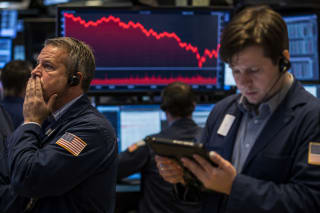
Investors have punished fast-food companies like McDonald’s (its stock price is down 24% this year), Domino’s (down 27%), and Yum Brands (down 8%), and rewarded casual-dining chains that can give families a value-focused night out: Chili’s owner Brinker is up 53%, Darden 8%, Bloomin’ Brands 17%, and The Cheesecake Factory 100%. Kids at Chili’s get eight entrée choices and coloring games, and parents get to have a margarita and hang out for an hour. Consumers have reversed course from last year, says Cristin O’Hara, head of Bank of America’s restaurant group, and now feel they might as well “spend a little more to get better quality and a different experience.”
Adults move in
As much as the kids’ vote counts, a growing number of adults have found their own reasons to order a kids’ meal, from tighter budgets to smaller appetites. In a May article about the trend, Ad Age called kids’ meals a “restaurant value hack” for customers “more concerned about their car payments than the free toy inside.”
Circana has found that adults from 18 to 34 are the fastest-growing segment of kids’ meal customers, with their orders up 51% since 2022 and 15% in the past year. David Portalatin, Circana’s top food and restaurant analyst, ties the phenomenon to diets, food prices, and Americans now eating at irregular times, perhaps due to hybrid or work-from-home schedules; 37% of restaurant consumers say they’re ordering smaller portions.
When Portalatin rattled off the eating times consumers now observe beyond three square meals a day, the list sounded like it was invented by Hobbits: “brunch,” “morning snack,” “afternoon occasions,” “late-night occasions,” “something light,” “something small.” At odd times, a kids’ meal seems more fitting than an adult double bacon cheeseburger. As Portalatin explains, “A lot of consumers tell us, ‘I had a light, healthy meal.’ We’ll ask, ‘What did you have?’ They’ll say, ‘Well, it was still a cheeseburger and fries, but it was the kid-meal bundle.’”
The Tastewise-Esrock survey arrived at a bolder conclusion, that “GLP-1s are changing how adults eat in 2026,” and predicts: “This isn’t a fad. It’s the future of food.”
Whatever the cause, the trend is easy to spot on social media, where adults routinely share kids’-meal hacks, like ordering two kids’ meals for the price of one adult meal.
Esrock’s Wilson says his daughter’s Gen Z boyfriend swears by the double-kids’-meal hack. He also recently polled followers on LinkedIn, and was surprised to see half of them admit to ordering a kids’ meal for themselves over the past year. Some people have even mentioned their love for the healthy sides that sprang out of the 2000s nutrition crackdown: “They’ll say, ‘I have a better beverage—I can get apple juice, I can get milk. I have a better side—I can get broccoli, I can get carrots.’”
For research (“research”?), Wilson subjected himself to a “kids’-meal challenge,” eating his way through 30 straight days of fast food. “I had three or four per sitting,” he admits. “So really I had 90 to 120 different meals.” He says that a couple of restaurants refused to let a middle-aged man order a kids’ meal, though one did relent after staff learned it was for social media. “It’s become a very low barrier,” Wilson says. “You just order what you order.”
But why does a 20-something eating a desk lunch or a 50-year-old on Ozempic want a meal in a box designed for children? Grownup life has evolved, too: Milestones like finding a stable career, settling down, and buying a home are arriving later for adults, and restaurant brands are betting that a moment of comfort in a cardboard box is good business.
“We have more mental stress and challenges today,” Wilson says. “And the beauty of the kids’ meal for some people is that it’s a mental break. The graphics and the silly toy and the little thing of fries allow them to destress and be a kid for a couple of minutes.”