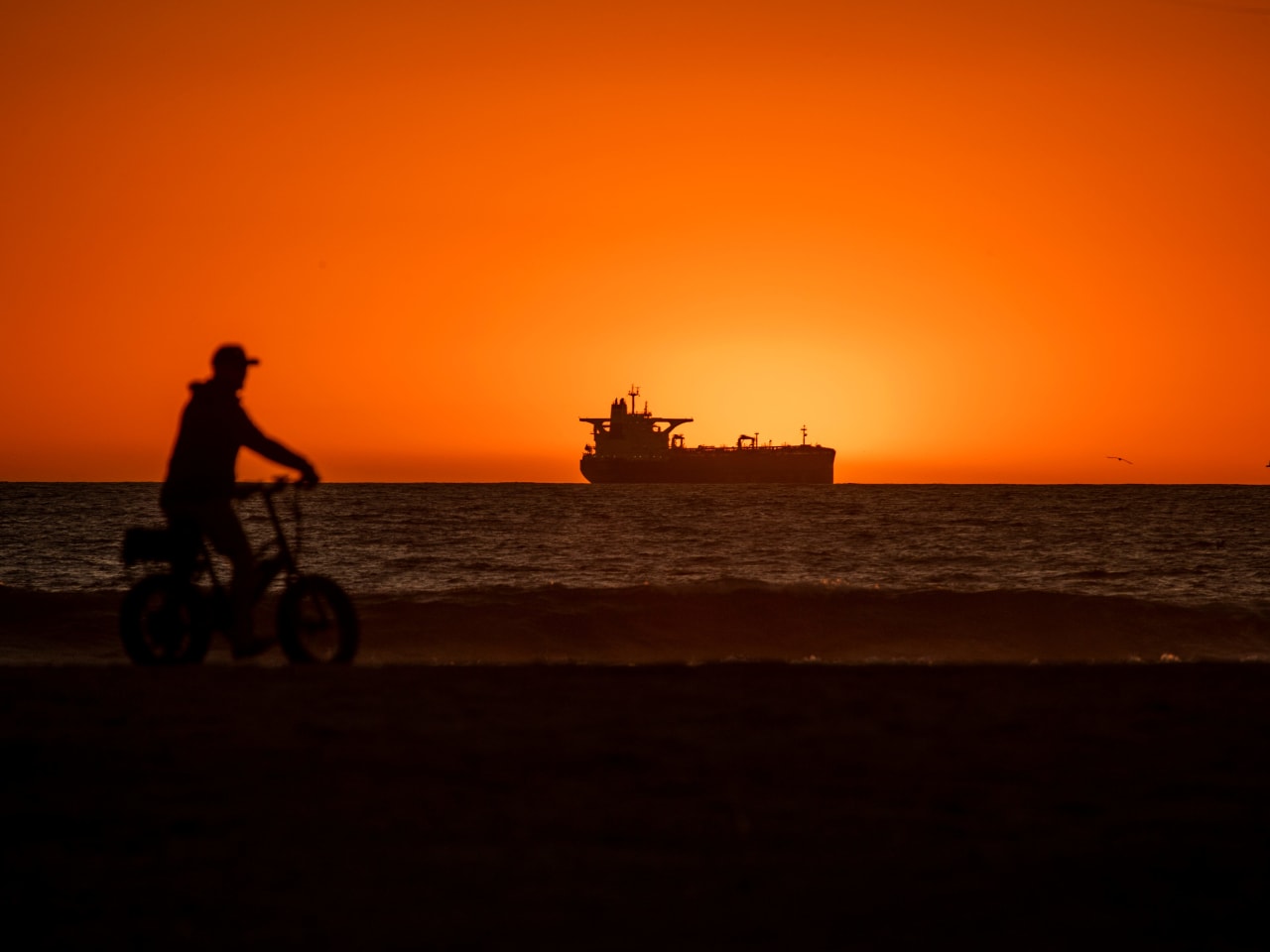

Oil tanker rates have skyrocketed, one reason why energy costs may remain high even if the price of crude cools.
Allen J. Schaben / Los Angeles Times via Getty Images
The oil market is in the midst of a shipping crisis that could keep crude prices high.
Tanker rates have skyrocketed, adding pressure to energy costs even if oil prices cool.
Shipping pressures also directly push up the price of oil, adding to price pressures for consumers.
Oil prices have fallen from wartime peaks, but a broader transportation crisis in the crude market suggests it may not matter so far as preventing further pain for consumers.
Energy costs have been top of mind for investors for most of this year as the war has dragged on. Brent crude , the international benchmark, has seesawed recently, trading around $105 a barrel this week as traders weighed supply disruptions alongside the outlook for a resolution to the war.
But it’s no longer an oil supply shortage energy experts are worried about — it’s a shipping crisis that has drawn more attention recently, analysts watching the crude market say.
Shipping costs are thought to be secondary to the price of oil when it comes to energy costs, but that’s changed recently as tanker rates and diesel prices have skyrocketed , reflecting how the market is pricing in a higher premium for transporting oil out of the Middle East, as well as reduced refining capacity to produce fuel.
For consumers, it’s fundamentally changed the equation for the cost of supplying oil — meaning energy costs could stay high even if oil prices cooled from their current levels, energy experts say.
Rates for Very Large Crude Carriers, a type of large tanker frequently used in the Persian Gulf, have more than quadrupled in the past year, rising from about $50,000 a day in late 2025 to over $200,000 a day in October, according to the shipping intelligence site Fearnpulse.
Rates for Very Large Crude Carriers has more than quadrupled over the last year.
Fearnpulse
The cost of VLCC trips from the Persian Gulf to the Far East has risen from under $2 per barrel to over $30 per barrel year-to-date, according to a separate estimate from BCA Research.
Diesel, a refined oil product that fuels ships and other modes of transportation, has also exacerbated the situation. Diesel prices remain near a record high, clocking in at around $6.29 a gallon this week, AAA data shows.
Some ships traveling through the Middle East are also being forced to make a longer voyage, given the blockade of the Bab-el Mandeb Strait, BCA said.
Recent attacks, meanwhile, have reduced the world’s supply of oil tankers that are in working condition. The world has lost around 20 oil tankers in the last 2 weeks, according to one estimate from HFI Research , a contrarian energy research firm.
“The recovery in Middle Eastern crude exports has come at the price of a surge in transportation costs, which is creating major dislocations in global crude markets,” BCA Research wrote in a client note. “While the surge in dark transits through the Strait of Hormuz has eased tightness in global crude supplies, it is too early to declare the all-clear for oil markets,” the firm said of how transportation issues could override relief from increased exports.
Oil flows coming out of the Gulf have been better than expected, reaching around 81% of their pre-war norms during the month of September, according to Kpler data. Energy inflation , though, accelerated significantly in the month of September, rising 5.2% over the last month, per the latest consumer price index.
The surge in transportation costs means another $35-$40 should be factored into the price for each barrel of oil, according to Helima Croft, the global head of commodity strategy at RBC Capital Markets.
She pointed to how Trafigura’s recent charter of the Alexandros, one large oil tanker set to travel from the US Gulf Coast to China, recently rose to $76 million, up from the normal rate of $7 million to $10 million, a person familiar with the matter told CNBC this month.
“We’re in a transportation crisis,” Croft said, speaking to CNBC on the supply and price pressures in the oil market. “The shortage is really now coming to ships, coming to cruise that will move this product to refineries.”
Shipping challenges also directly affect the price of oil, pushing up energy costs.
Last month, Kpler flagged the possibility that crude could rise as high as $150 a barrel, pointing to pressures stemming from the diesel market and disrupted flows in the Red Sea and in the Strait of Hormuz.
HFI Research floated the possibility that Brent crude could rise as high as $135 a barrel by early November, citing limited tanker supply and higher rates as factors putting upward pressure on prices.
“If the current escalation continues (multiple tankers attacked daily) and the Oman Lane flow slowdown persists, I see Brent reaching $133 to $135,” HFI wrote in a recent note .
Read the original article on Business Insider