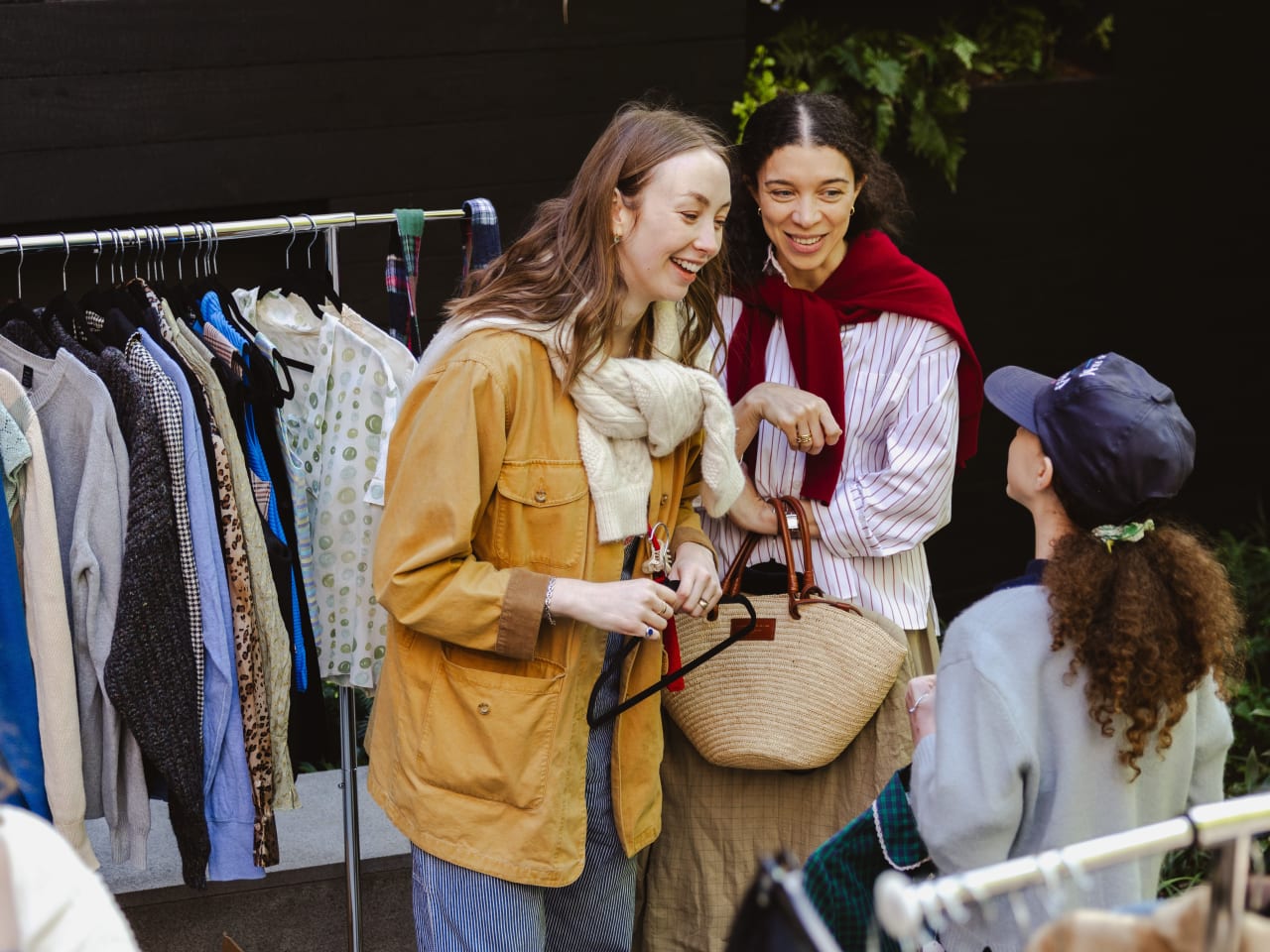

Substacker Erika Veurink hosted a pop-up vintage sale for her readers at Rothy’s.
Courtesy of Rothy’s
A version of this post appears in the CMO Insider: Creator Brief newsletter.
Sign up for Business Insider’s marketing newsletter .
The latest hot marketing KPI: RSVPs.
Creators ranging from Substackers to “SNL” stars are jumping off the screen to in-person events — and marketers can’t get enough.
“IRL is the No. 1 brand equity builder of all the channels,” said Justin Thomas-Copeland, CEO of the American Association of Advertising Agencies (4As).
As it becomes harder to reach customers online, in-person events offer a way for brands to reach their biggest fans — and hopefully inspire a flurry of social content.
One night last month, Snapple turned a decommissioned Staten Island Ferry into a floating comedy club featuring Colin Jost and Pete Davidson.
Lindsay Burstein , a top marketer at Snapple parent Keurig Dr Pepper, said the night resulted in about 200 pieces of user-generated content.
“It is the buzziest thing that the brand has done in a very long time,” she said.
Snapple threw a “Snapple Island Ferry” event with comedians Colin Jost and Pete Davidson.
Snapple
Events aren’t a new phenomenon, but interest from marketers is surging. In its annual survey of marketers, Linqia found that 53% said they planned to work with influencers on events in 2026, up from 34% in 2025.
“We’ve seen an uptick in both custom brand pop-up experiences and brand activation at large events,” Linqia’s chief strategy officer Keith Bendes said.
Influencer marketers are becoming event planners
IRL activations and events can also help brands gauge the depth of a creator’s connection with their audience — and how valuable partnering with them might prove.
Substack creators, for instance, have “rabid fans and followers” who are hungry to connect in person, said Rothy’s VP Anna Doré.
After Substacker Erika Veurink’s article for New York Magazine featuring Rothy’s shoes went viral, Rothy’s struck a partnership with the writer that included a vintage pop-up experience at a Rothy’s in New York City.
The Rothy’s pop-up drew over 200 people and grew the store’s foot traffic by 75% that day.
There can be category-specific reasons some brands are going all in on events. Flushable wipes maker Goodwipes, for one, leans on IRL experiences, said SVP of marketing Meredith Diehn, “partially because it’s an intimate category, but there’s a lot of questions around flushability and why should I leave toilet paper for Goodwipes.”
Still, it can often be harder to measure success from an IRL event and prove it’s an efficient use of marketing dollars.
Beverage brand Poppi is also a fan of IRL events and pop-ups.
Courtesy of Poppi
“Live experiences is not an efficient business,” Bilt CMO Zoe Oz said. “It’s like the most inefficient, unscalable thing you can possibly do. But we found those to be 10 times more effective than the other ways we used to spend money.”
Events also aren’t a foolproof strategy, Copeland of 4As said.
There’s a lot that goes into an experience, and if one part goes wrong or a creator is involved in an inauthentic way, criticism can spread quickly.
They present practical challenges as well, sometimes forcing marketers to wear yet another hat: event planning.
Burstein said that planning Snapple’s comedy event — despite its eventual success — took her “blood, life, sweat, and tears.”
Read the original article on Business Insider