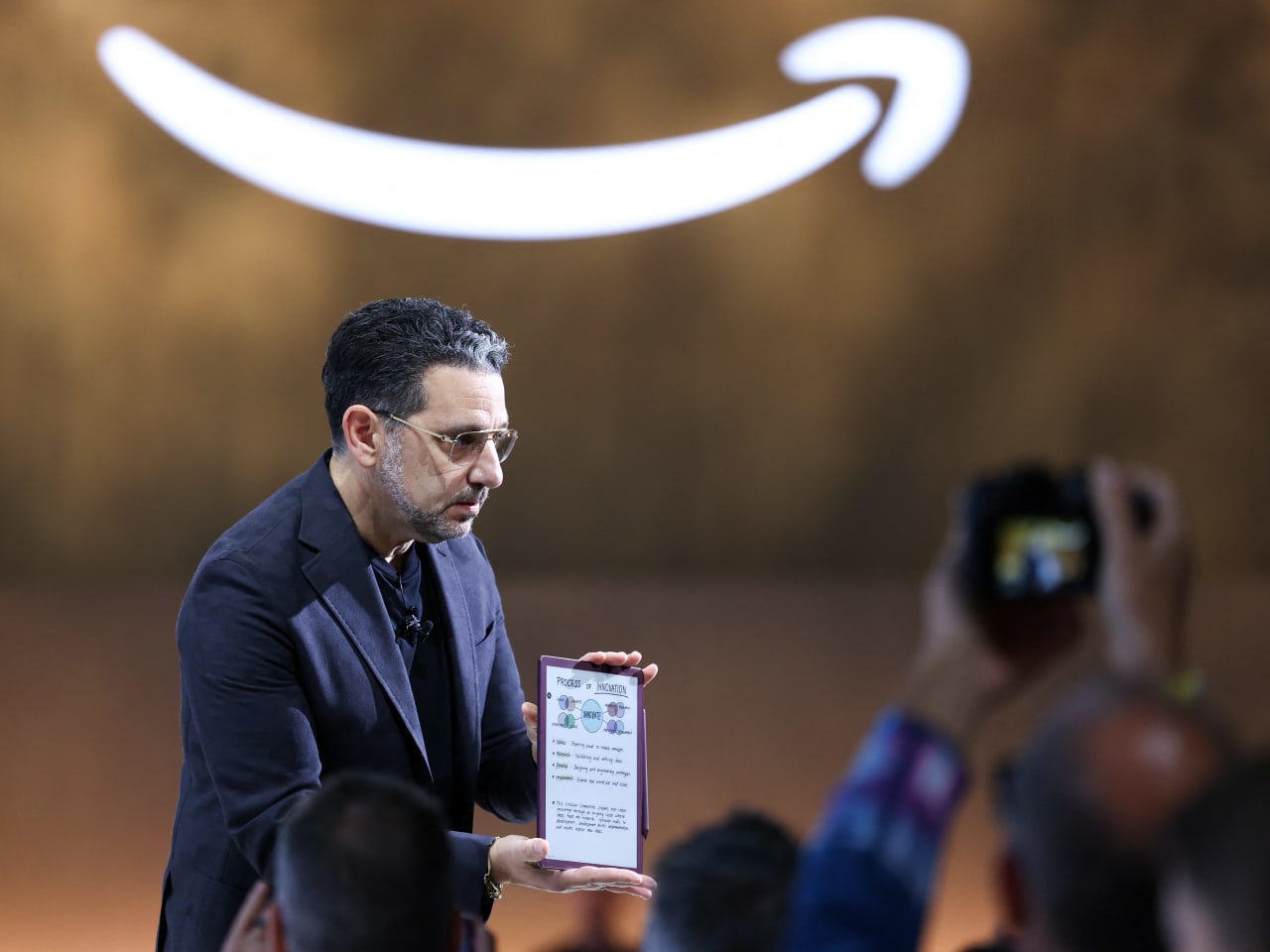

Panos Panay, head of Amazon’s Devices and Services team
CHARLY TRIBALLEAU/AFP via Getty Images
Amazon launched a series of new devices this month, including Alexa tablets and Bee AI wearables.
Rising memory costs forced “difficult trade-offs” on Amazon’s device prices, sales, and profit.
Amazon is seeking more Alexa revenue from enterprise sales, licensing, and ads.
Amazon launched a flurry of new consumer devices this month. Behind the scenes, rising memory costs are adding pressure to its already money-losing hardware business.
An internal planning document obtained by Business Insider shows Amazon forecasting a $612 million gross loss this year for its first-party devices business, compared with a leadership target of a $438 million loss.
The document said rising memory costs were “putting pressure” on the business’s profitability, forcing “difficult trade-offs” among sales volumes, average selling prices, and gross profit.
The projected $612 million loss was at the gross profit level, meaning it did not account for all operating expenses, such as R&D, sales and marketing, and administrative costs.
The figures offer a rare glimpse into the pressure on Amazon’s hardware business as it absorbs rising component costs. Other tech hardware companies, including industry leader Apple , face similar pressure from surging memory chip prices.
An Amazon spokesperson declined to comment.
A new wave of AI devices
Despite the pressure, Amazon continues to expand its consumer hardware lineup. Even if the company loses money on device sales, it can make money in other ways, such as subscription services, as more customers use its gadgets.
In October alone, the company introduced new Kindles, Alexa-powered tablets, Ring smart locks, and AI wearables under its Bee brand. The August planning document identified Bee and new smart glasses as strategic products still in an investment phase.
Amazon has historically used low-cost hardware to pull customers into a broader ecosystem of shopping and digital content. Rising component costs could make that strategy more expensive, forcing the company to raise prices.
The clearest shift is in Amazon’s tablets. Earlier this month, the company phased out Fire tablets after 15 years and replaced the budget-friendly lineup with pricier Alexa Tablets powered by Alexa+. The new devices cost between $229.99 and $499.99, a notable increase from previous generations.
Not just Amazon
The planning document was prepared in August, the same month Amazon raised prices on products including Echo speakers, Kindle e-readers, and Fire TV devices.
The pressure extends beyond Amazon. Apple has raised prices on some Macs and iPads, while Microsoft and Sony have increased console prices. Dell , HP, and Lenovo also face higher memory costs.
The AI boom is helping drive the squeeze. Huge data center investments have increased demand for memory chips, while manufacturers have devoted more capacity to high-bandwidth memory used in AI servers. That has tightened supplies and raised prices for components used across consumer electronics.
Amazon is experiencing both sides of the boom. It expects roughly $220 billion in capital expenditures this year, largely to expand AWS data centers for AI demand, while higher component costs squeeze its consumer hardware business.
The rising cost of Alexa+
The August planning materials show Amazon reassessing both Alexa+ revenue and operating costs. They called for updated forecasts, expansion through enterprise sales and advertising, and more detailed AWS cost modeling.
Amazon is now confronting the cost of operating Alexa+ at scale. Business Insider reported in July that internal forecasts put Alexa+’s AWS cloud costs at roughly $1.7 billion in 2026, nearly triple the prior year’s figure. Amazon was working to lower those costs by relying less on Anthropic’s AI models and routing more requests to its own, cheaper systems.
A separate project called Moonraker , intended to give Alexa more advanced AI-agent capabilities, was projected to require more than $100 million in GPU spending this year. Amazon internally considered delaying or scaling back the initiative as one option for easing cost pressure, Business Insider previously reported.
Have a tip? Contact this reporter via email at ekim@businessinsider.com or Signal, Telegram, or WhatsApp at 650-942-3061 . Use a personal email address, a nonwork WiFi network, and a nonwork device; here’s our guide to sharing information securely .
Read the original article on Business Insider