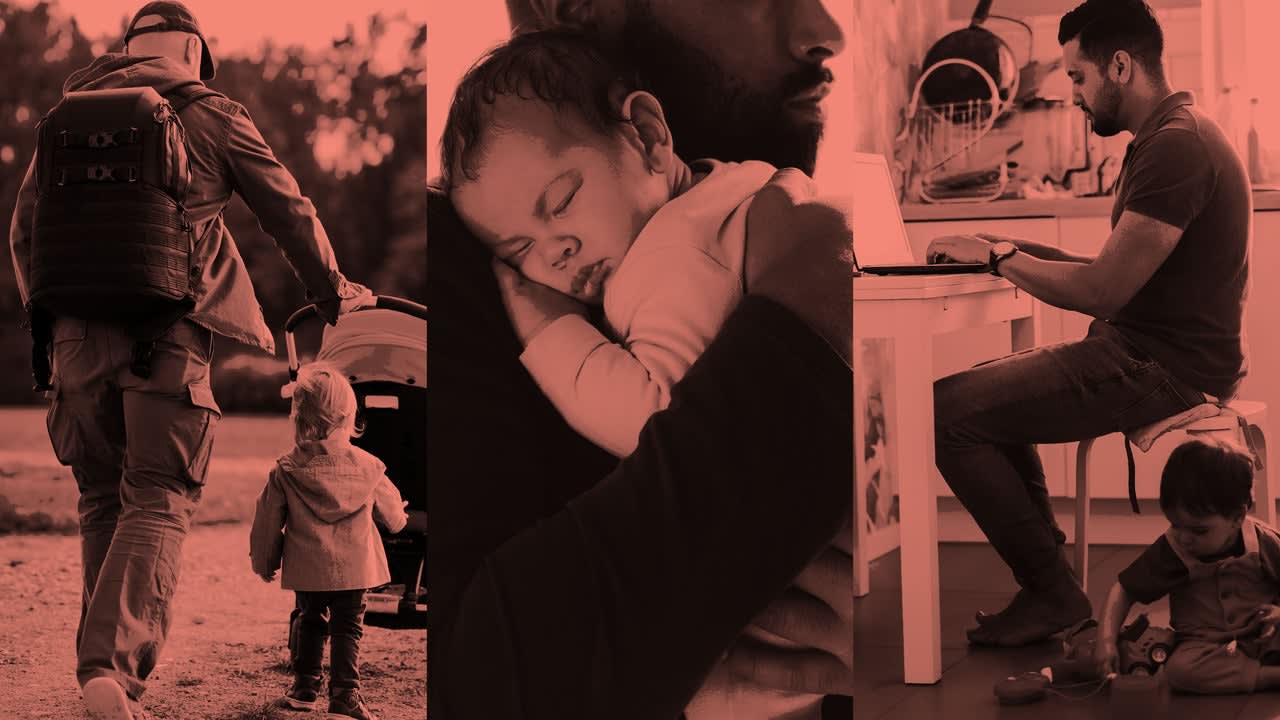

There was a moment when it seemed like men—at least some of them—had started openly talking about the value of parental leave.
Several years ago, Reddit cofounder Alexis Ohanian wrote about taking four months of paternity leave here in Fast Company . He argued it was crucial that men not only had access to paternity leave, but were empowered to take it.
“I wanted to set an example for all of our hundreds of employees—not just the men, but especially them,” Ohanian wrote of his decision to go on leave. “I believe it starts at the top, not only with implementing paid family leave policies for moms and dads but also through leading by example.” Even Mark Zuckerberg took two months of parental leave after each of his daughters were born in 2015 and 2017.
At tech companies like Reddit and Meta, generous leave policies have now become a way to help attract and retain talent. But despite the growing awareness that it’s important for men to take leave, the data on how many men actually do so seemed stagnant.
For years, there had been little change in the share of men who took leave, and while men often took some parental leave, it was quite minimal and often cobbled together through vacation days or sick days or unpaid time off.
“In more recent times, most men are taking some time off when their child is born,” says Richard Petts, a sociology professor at Ball State University. “But it’s been short, typically less than a week—being there in the hospital when their child is born. And when mom and baby come home, they go back to work.”
As more and more states have adopted paid leave policies, however, there seems to be a broader cultural shift underway: The latest research suggests men are not just taking leave, but that there has been a clear uptick in that trend over the last six years.
A report from the advocacy group Paid Leave for All revealed that fathers are now filing at least as many leave claims as mothers in California, Colorado, and Washington. Across eight state programs for which there is at least a year of data, leave claims from men now account for 40% of claims overall.
This is a marked increase from the share of men who filed claims over a decade ago, when some of the earliest leave programs were rolled out in California, New Jersey, and Rhode Island. “When those programs launched, way more women than men were taking or applying for bonding leave,” says Molly Weston Williamson, a senior fellow at the Center for American Progress who authored the Paid Leave for All report. “What we’ve seen over time is that men are catching up to or coming close to the number of claims from women.”
Across the three states that implemented paid leave first, the sheer number of claims from men has climbed significantly—and in states that enacted paid leave more recently, men are seeking more leave claims from the start. The programs in states like California and New Jersey have also improved over time, securing better pay and job protections.
“Bigger picture, what we’re seeing in states across the country is that when dads have the opportunity to take paid leave,” she says, “they’re showing up and taking it.”
A closing gap with women
There are also signs that when men take parental leave, they use more time than they did previously.
An analysis by the American Institute for Boys and Men (AIBM) found that men are not only taking more leave, but that the gap between how much leave men and women take is slowly narrowing. That’s in contrast to a report earlier this year from the Minneapolis Federal Reserve, which offered a more dreary picture of the progress on paid leave utilization by men. (That report only drew on data prior to 2020, which means it didn’t take into account how new state paid leave policies have enabled more men to go on leave.)
“We are now seeing really significant increases in the number of the share of fathers taking time off, the amount of time they’re taking off, [and] the amount of parenting being done by dads, even just in the last few years,” says AIBM president Richard Reeves. “So we’re starting to see the thing we’ve all been hoping for.”
The institute’s research indicates that men are more likely to take intermittent leave or work partial weeks, rather than taking multiple weeks of leave at a stretch. Still, dads are taking leave more frequently on the whole, at a rate that has tripled since 2019, with those gains concentrated in states that provide paid leave. A recent study from the New Practice Lab at New America also supports these findings: On average, men in states with paid leave take over four weeks, more than a week longer than their average leave in other states.
Dads still take less time than moms do—in the range of two weeks on average. But according to Petts, that figure increases to over three weeks when only looking at men who take any time off. “You could say that fathers have sort of doubled their average length of leave,” he says. Men are also now more likely to use time that is explicitly earmarked for parental leave, rather than drawing on sick days or unpaid time off.
‘What is viewed as acceptable for men’
Over the years, it has become increasingly common for certain companies to adopt a blanket parental leave policy, rather than outlining separate policies for maternity and paternity leave. Still, only about a quarter of private sector employees have access to paid leave through their company, which makes state policies essential for workers who wouldn’t otherwise have any coverage. To put things in perspective: Fourteen states now have leave programs, which means one in three workers have access to paid leave.
“In places where there isn’t a public policy guarantee, there [are] big differences in who has access,” Williamson adds. “Higher income, full-time workers are much more likely to have access . . . Whereas when we have a state program, the goal is always to get as close to universal as we can.”
When states enact paid leave, men and women are also usually entitled to the same amount of time, though mothers may qualify for additional medical leave due to disability benefits or other accommodations for pregnant women. The rise in claims from men does suggest that gender neutral policies may help drive utilization among dads, in addition to being more inclusive of other family structures.
At the same time, Petts has found through his research that men can actually face greater penalties for taking leave when their company has a gender neutral policy, rather than framing it as paternity leave. They are perceived as less committed to the job and may experience professional setbacks. “I don’t know that simply having access to a policy makes it more culturally acceptable to use the policy,” he says. “I think it provides a mechanism for men who want to use the policy to take it. But it is still highly dependent on workplace culture and what is viewed as acceptable for men.”
Reeves, however, is more optimistic that the uptake of parental leave among men may signal a more meaningful shift. While the stigma around men taking leave has not been eliminated altogether, he argues men are stepping up more than the data on leave—and political rhetoric on gender roles—might suggest. He points to recent research that indicates the gender gap across both paid and unpaid work has been shrinking since the pandemic. In other words: Men are doing more unpaid work in the home, and women are doing more paid work outside the home.
“The progressive view is that dads still aren’t doing enough on the home front, and currently the more conservative view is that dads shouldn’t be,” he says. “Meanwhile, dads are doing more.”


