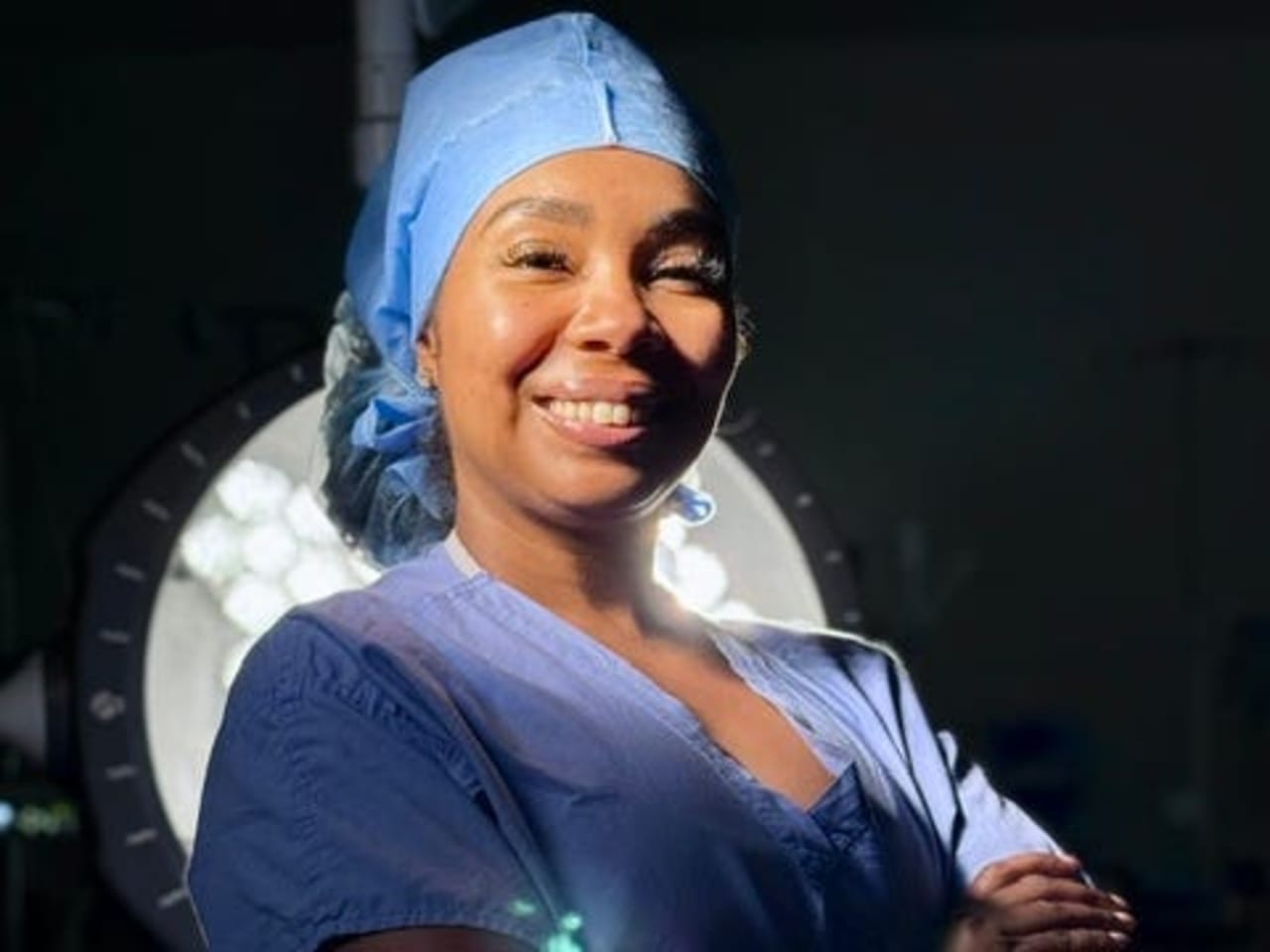

Sade Slack says her job is safe from AI.
Courtesy of Sade Slack
Sade Slack chose trade school over a four-year college and became a surgical technician.
She now has no student loan debt, but sometimes feels embarrassed for not attending college.
She feels secure from AI because her job depends on reading people and reacting in real time.
This as-told-to essay is based on a conversation with Sade Slack, a 38-year-old surgical technician based in California. It has been edited for length and clarity.
I entered high school with a heavy load of AP and honors classes . My middle school grades had put me on an accelerated track, and I pushed myself hard to keep up.
By 10th grade, I was burned out .
I came home from school and slept for hours just to recover. I obsessed over making A’s. Then the pressure started affecting how I handled tests. I got so anxious that I began avoiding them.
Halfway through the semester, I dropped all my classes.
That changed how I thought about success. I stopped worrying so much about what looked impressive on paper and started asking myself what kind of life I actually wanted.
That’s when I decided a trade school was the better option for me.
My family was disappointed when I said I didn’t want to attend a four-year college
My high school had a second path: Seniors who weren’t going to university could meet representatives from trade schools, community colleges, and companies that hire straight out of high school.
Suddenly, I could see options I hadn’t considered before. I got excited about my future again.
Trade school was also much easier to get into. No SAT. No waiting to hear from a first- or second-choice university. They reviewed my transcript and application and accepted me into an 18-month surgical technology program.
Tuition was about $23,000.
My parents didn’t understand why I would borrow that much money for trade school, and they refused to cosign my student loans, so I took out the loan myself.
Once classes started, the choice made even more sense
Anatomy, physiology, and sociology were built on subjects I had already studied in high school, but now I could actually use what I was learning.
We trained with our hands. I wasn’t memorizing information just to pass an exam. I was learning skills I would eventually use in an operating room with real patients.
That matters even more to me now when students can ask AI to explain almost anything in seconds. AI can be a great learning tool, but in my job, eventually, you have to know the material yourself. There is no shortcut when a patient is on the table.
While I was in school, I worked at Best Buy for $7.25 an hour to cover my living expenses.
I landed my first job before my friends graduated from college
Family issues had me moving between two states after graduation, so it took almost two years to land my first job .
I still remember that first paycheck: about $1,100. I thought I was rich.
I took my friends out for dinner and drinks. They were still in their second year of college. I had already finished school and started earning money.
Even my parents eventually admitted they were glad I hadn’t listened to them.
I’m now working my dream job
Today, I’m 38. I have no student loan debt . I have health insurance, a 401(k), and a pension through a major Southern California hospital system.
Some of my friends are still paying off their college loans.
My workdays can be brutal. A typical shift is 12 hours, and I might work six surgeries in one day. Some days, the breaks barely feel like breaks. But I love the work.
As a surgical technician , I prepare instruments, equipment, and supplies. I also make sure the surgeon has what they need throughout a procedure.
A big part of the job is anticipating what happens next. I watch faces. I listen for changes in tone. I notice when the energy in the operating room shifts. Sometimes I know what a surgeon needs before they have time to say it.
That’s one reason I’m not convinced AI is coming for my job anytime soon.
AI will probably take over more administrative tasks . It may become more involved in the operating room, too. But surgery involves more than completing a checklist.
You have to read the room. You have to recognize when a routine moment suddenly becomes serious. You have to respond before someone explains what they need. That human instinct still matters.
For years, I was embarrassed when colleagues asked where I went to school
I work alongside doctors with elite degrees. Some have had children my age attending Ivy League universities.
Saying “trade school” made me feel like I had somehow fallen short. Not anymore — especially now with the rise of AI.
A four-year degree can be a great investment. So can trade school. The important thing is knowing what you’re buying.
The work still challenges me. I’m still learning. Eighteen years later, that still makes the decision worth it.
Read the original article on Business Insider