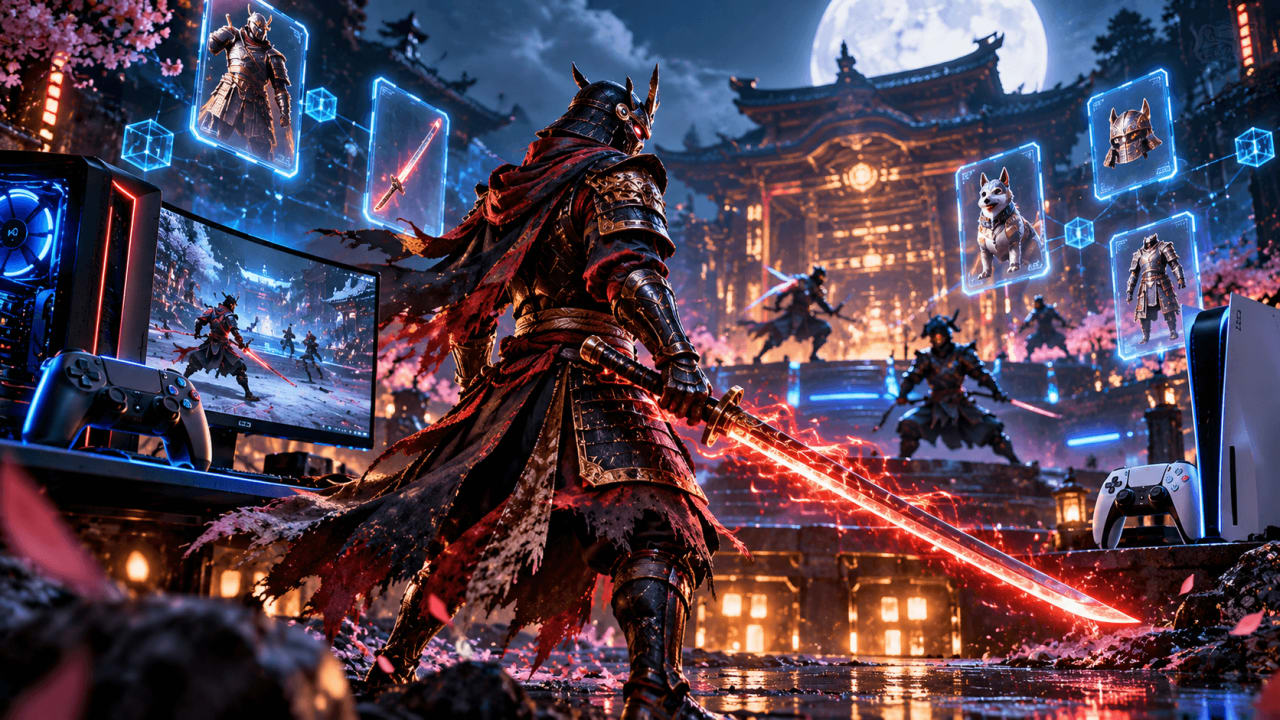

Katana Inu has entered a new Early Access phase as developer ChainVision Games pushes its blockchain-connected PvP title toward a wider mainstream gaming audience.
The free-to-play action game combines fast third-person melee combat with optional Web3 features, including the KATA token and blockchain-based ownership of selected cosmetic assets.
The Early Access phase began on October 22, while the team has also confirmed that work is underway to bring Katana Inu to PlayStation 5 as part of its wider platform roadmap.
Unlike many earlier blockchain games, Katana Inu is attempting to make crypto optional rather than a prerequisite for playing.
Katana Inu Moves Into Early Access
Katana Inu describes itself as a fast-paced multiplayer action game centered around sword combat, mobility and competitive PvP.
Its official website currently presents the game as available through a Steam Open Beta alongside a separate Web3 launcher.
Players can access 1v1, 3v3, Free-for-All and Battle Royale modes, with combat mechanics including double jumps, grappling hooks, character abilities and multiple weapon classes.
The game’s Early Access phase began on October 22 following several months of public testing and demo releases.
ChainVision Games has spent several years developing the project and is positioning Early Access as one of the final major stages before a broader full release.
Steam Version Does Not Require Crypto
One of the most notable aspects of Katana Inu’s model is how it separates its traditional game from its Web3 economy.
The Steam-facing experience is free-to-play and does not require users to buy cryptocurrency, connect a wallet or own NFTs before playing.
Katana Inu says blockchain functionality is optional and that players can simply download the game and participate in its PvP modes.
Its dedicated Web3 launcher provides the additional crypto layer.
According to the Katana Inu website , users of that version can interact with the KATA ecosystem and blockchain-based cosmetic ownership.
The distinction reflects a broader shift across Web3 gaming.
Rather than asking players to understand wallets and tokens before starting a game, developers are increasingly trying to keep blockchain infrastructure in the background until a player chooses to use it.
Steam Still Lists the Full Release as Coming Soon
There is an important distinction between Katana Inu’s Early Access phase and its final Steam release.
The official Steam listing continues to label the game as “Coming soon,” while also stating that Early Access begins from October 22.
The store currently provides access to a downloadable build and describes Katana Inu as an online PvP game from ChainVision Games.
This means the project should not yet be treated as having completed its full commercial launch.
Instead, the current stage gives players access while the developer continues testing, polishing and expanding the game.
Katana Inu’s own materials similarly describe the PC version as an Open Beta rather than the finished global release.
PlayStation 5 Is the Next Major Expansion
The team is also preparing to move beyond PC.
Katana Inu’s current publishing materials say PlayStation 5 development is underway, with console expansion forming part of the project’s longer-term roadmap. ( Katana Inu )
The developer has said that an agreement is in place to bring the game to PS5 for its full release, although no final console launch date has been announced.
A console release would represent a meaningful milestone for a blockchain-connected game.
Web3 games have historically concentrated on browsers, PC launchers and mobile platforms where wallet integration is easier to implement.
Reaching PlayStation would expose the project to a much larger traditional gaming audience.
However, Katana Inu would still need to satisfy platform certification requirements and complete development work before the console version becomes publicly available.
Web3 Features Are Focused on Ownership, Not Access
Katana Inu’s blockchain model is primarily built around optional ownership and rewards rather than locking gameplay behind tokens.
The project’s official materials say cosmetic skins can exist as blockchain assets while emphasizing that NFTs are not required to play.
KATA serves as the ecosystem token associated with the Web3 version.
The project’s broader documentation also describes seasonal perks and rewards for token holders while keeping combat progression skill-based.
That distinction is particularly important for competitive games.
If blockchain assets directly increased damage, health or other gameplay advantages, the system could quickly become pay-to-win.
Katana Inu instead says its monetization strategy is focused on cosmetics, skins, weapon variants, emotes and seasonal content.
Its publisher presentation explicitly describes the game as having a cosmetics-first model with no pay-to-win mechanics.
Four PvP Modes Are Already Playable
Katana Inu currently centers on four primary competitive modes.
1v1 provides direct sword duels between individual players.
3v3 introduces squad-based combat and coordinated team play.
Free-for-All places multiple players in the same arena without teams.
Battle Royale expands the format into a larger survival-style map.
The developer is also planning additional modes, including objective-based competitive formats and PvE content.
The project’s 2026 whitepaper lists Zombie Mode, squad PvE missions and dedicated tournament functionality among planned additions.
The game is built in Unreal Engine 5 and emphasizes mobility through grappling, double jumps and aerial movement alongside melee combat.
Competitive Gaming Is Central to the Project
Katana Inu is also positioning itself as a potential esports-oriented title.
The Early Access launch included competitive community sessions involving 1v1 and 3v3 matches, with small cash prizes offered to participating players.
The developer’s longer-term materials describe structured tournaments and competitive seasons as part of its roadmap.
That approach differs from the traditional play-to-earn model that dominated blockchain gaming during the previous cycle.
Instead of rewarding players primarily for repetitive participation, Katana Inu is trying to connect blockchain rewards with competitive gameplay.
Whether that model proves sustainable will depend less on token economics and more on whether the game can retain an active player base.
Web3 Gaming Is Moving Away From Token-First Design
Katana Inu arrives at a time when the blockchain gaming sector is changing how it presents crypto to players.
Earlier GameFi titles often put tokens, NFT purchases and earning mechanics at the center of onboarding.
That model generated speculative interest but frequently struggled to retain players once token incentives weakened.
Newer projects increasingly emphasize gameplay first.
Katana Inu’s approach reflects that shift.
A Steam player can theoretically engage with the game without interacting with its blockchain layer at all.
A player interested in digital ownership can instead use the Web3 launcher.
This separation potentially reduces one of blockchain gaming’s biggest onboarding problems: forcing mainstream players to learn crypto infrastructure before they know whether they enjoy the game.
The Game Still Faces a Difficult Market
Launching a functioning game is only the beginning.
Competitive multiplayer titles depend heavily on player density.
Matchmaking quality declines when there are too few active players, regardless of the quality of the underlying combat system.
Katana Inu will therefore need to turn Early Access into sustained player growth rather than relying solely on its existing crypto community.
Console expansion could help.
So could keeping the Steam experience independent from mandatory blockchain participation.
But the game will ultimately compete for users against established free-to-play titles with significantly larger development and marketing budgets.
Web3 functionality alone is unlikely to provide an advantage if the core gameplay cannot retain players.
Katana Inu Tests a More Mainstream Web3 Gaming Model
Katana Inu’s Early Access launch provides another example of blockchain gaming attempting to move closer to conventional game distribution.
The core product is a free-to-play multiplayer action game.
Crypto sits alongside that experience rather than blocking access to it.
The Web3 launcher adds KATA and blockchain ownership, while Steam provides a more familiar route for traditional PC players.
PlayStation 5 could extend that strategy further if the planned console version reaches release.
For the broader crypto gaming industry, the important question is not whether Katana Inu can attach a token to a multiplayer game.
That has been done many times before.
The more interesting test is whether a Web3 project can build a game that players choose to play even when they ignore the crypto layer entirely.
If Katana Inu can achieve that, it would represent a much more sustainable model for blockchain gaming than the token-first systems that defined the sector’s previous generation.
Disclaimer: This article is provided for informational purposes only. It is not offered or intended to be used as legal, tax, investment, financial, or other advice.