
CFOTO/Future Publishing via Getty Images
A Chinese chipmaker rattled the AI-memory trade — and exposed its dependence on scarcity.
Investors are asking whether today’s chip kingpins can keep margins when the club gets crowded.
Sign up for First Trade , Business Insider’s daily markets newsletter.
Another day, another market tantrum — this time over fears that the tiny club dominating AI memory chips could get less exclusive .
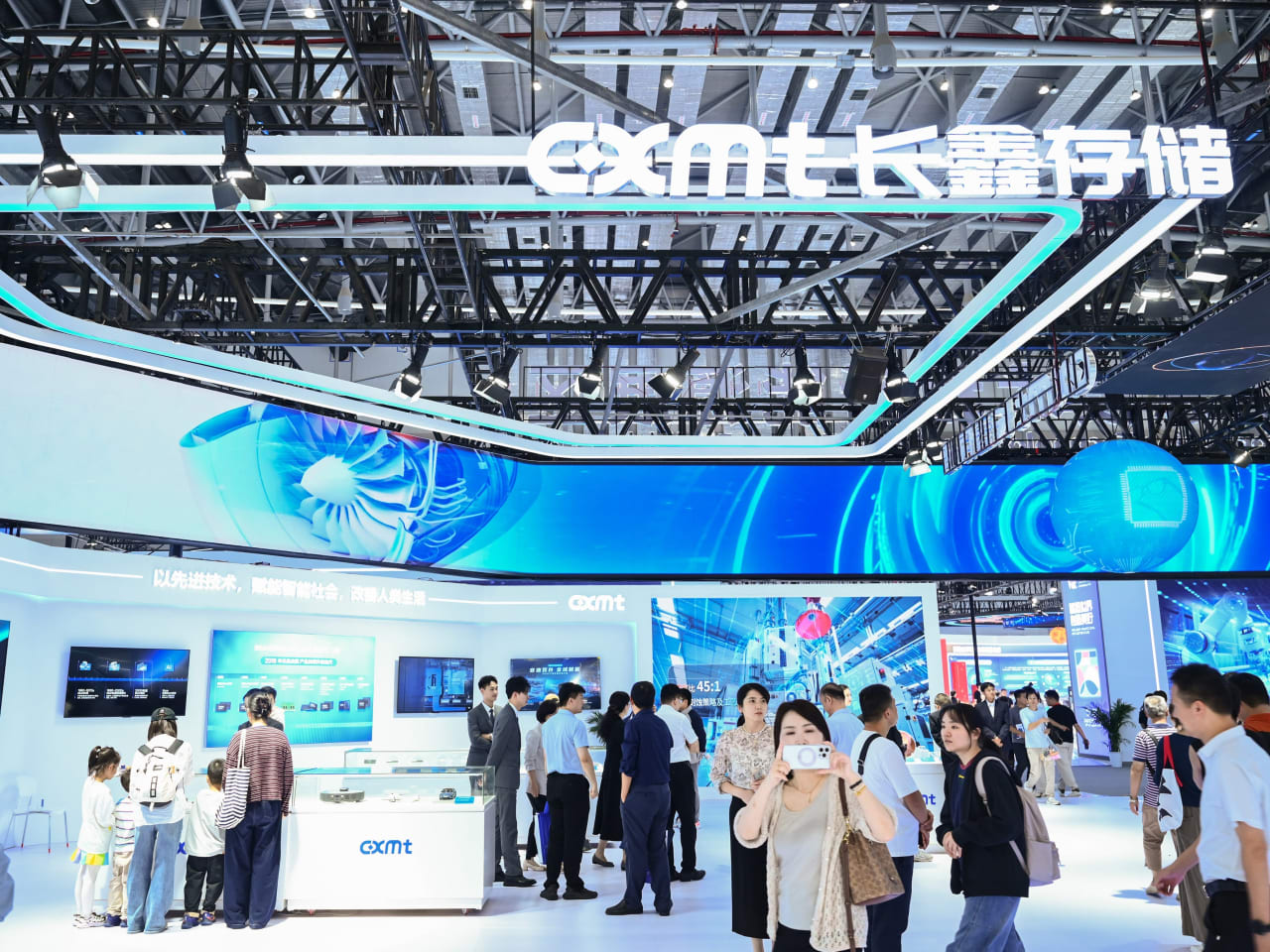
The culprit was Chinese chipmaker CXMT, which said it had made progress on a denser DRAM design and plans to introduce server-memory products by year-end. If it can turn that technology into reliable, large-scale production, it could eventually threaten the pricing power enjoyed by memory giants like Micron , SK Hynix , and Samsung — three of the AI trade’s biggest winners in recent months.
That remains a huge “if.” But it didn’t stop investors from reacting swiftly. The Roundhill Memory ETF ( DRAM ) slipped more than 3%, while the major memory names also sold off sharply.
The AI trade has seen this movie before. A new product announcement triggers a brutal sell-off in the companies supposedly in its crosshairs , only for investors to later take a breath and reassess .
Is this time different? It depends on how credible CXMT’s claim is. The company hasn’t yet proven it can match the quality of the incumbents, nor reach the same scale.
More than anything, the stocks that sold off on Tuesday are stand-ins for what investors fear most: the AI-memory trade losing its scarcity premium. Investors are suddenly having to consider the fact that the industry’s competitive landscape could change.
The party isn’t cool anymore once everyone shows up, and some investors are eyeing the exit.
The AI trade is terrified of commoditization
While this instance of (alleged) AI disruption may feel reminiscent of past wipeouts at the hands of OpenAI and Anthropic , it fits into its own category.
Those announcements raised questions about whether a company’s product or workflow would eventually be disrupted, and possibly even rendered obsolete. The CXMT development is less existential, and more centered around the question of whether the pool of major memory-chip makers could grow.
The real question is whether new supply could eventually pressure memory-chip prices and margins, forcing industry leaders to spend even more to protect their edge. That doesn’t sound like good news for companies nursing year-to-date returns in the triple digits.
A divide within chipmakers
Even if CXMT doesn’t deliver as advertised, the prospect of future disruption in the memory-chip market will linger. That could put a premium on the companies best insulated from direct competition on memory pricing. It may ultimately create two distinct groups: firms benefiting primarily from today’s supply squeeze, and those building broader competitive advantages to protect themselves.
Nvidia is a good example of the latter. The company swelled to largest-company-ever status on the back of immense GPU demand. But it’s also pushed further into CPUs and open-source AI , expanding its foothold across the AI stack rather than relying solely on its flagship chips.
What’s ironic is that investors spent the past two years worrying about whether the world could make enough AI chips. Now they’re starting to worry about the opposite long-term problem: what happens when more competitors show up.
So while the latest AI sell-off may fade, the long-term questions it raised probably won’t.
Read the original article on Business Insider