
To help you understand the trends surrounding business and technology and what we expect to happen in the future, our highly experienced Kiplinger Letter team will keep you abreast of the latest developments and forecasts. ( Get a free issue of The Kiplinger Letter or subscribe .) You’ll get all the latest news first by subscribing, but we will publish many (but not all) of the forecasts a few days afterward online. Here’s the latest…
Launching data centers into space is a moonshot. It’s hard to see the tech expanding beyond niche uses, even given a decade or more to develop. But big bets and upcoming activity are worth watching.
Start with Google recently launching its first test computer chips , known as Tensor Processing Units (TPUs), to see how they handle the harsh conditions of space, such as the vibrations of spaceflight, radiation and extreme temperatures. Google is working with satellite firm Planet to see if AI chips survive space phenomena that can “wreak havoc on electronics.”
Others working on the tech include Starcloud, K2 Space, Blue Origin, Axiom Space and Cowboy Space. Nvidia, too, has a specific chip design for the stress of orbit. Before the recent Google launch, there were others who had similar tests.
SpaceX will dominate the field
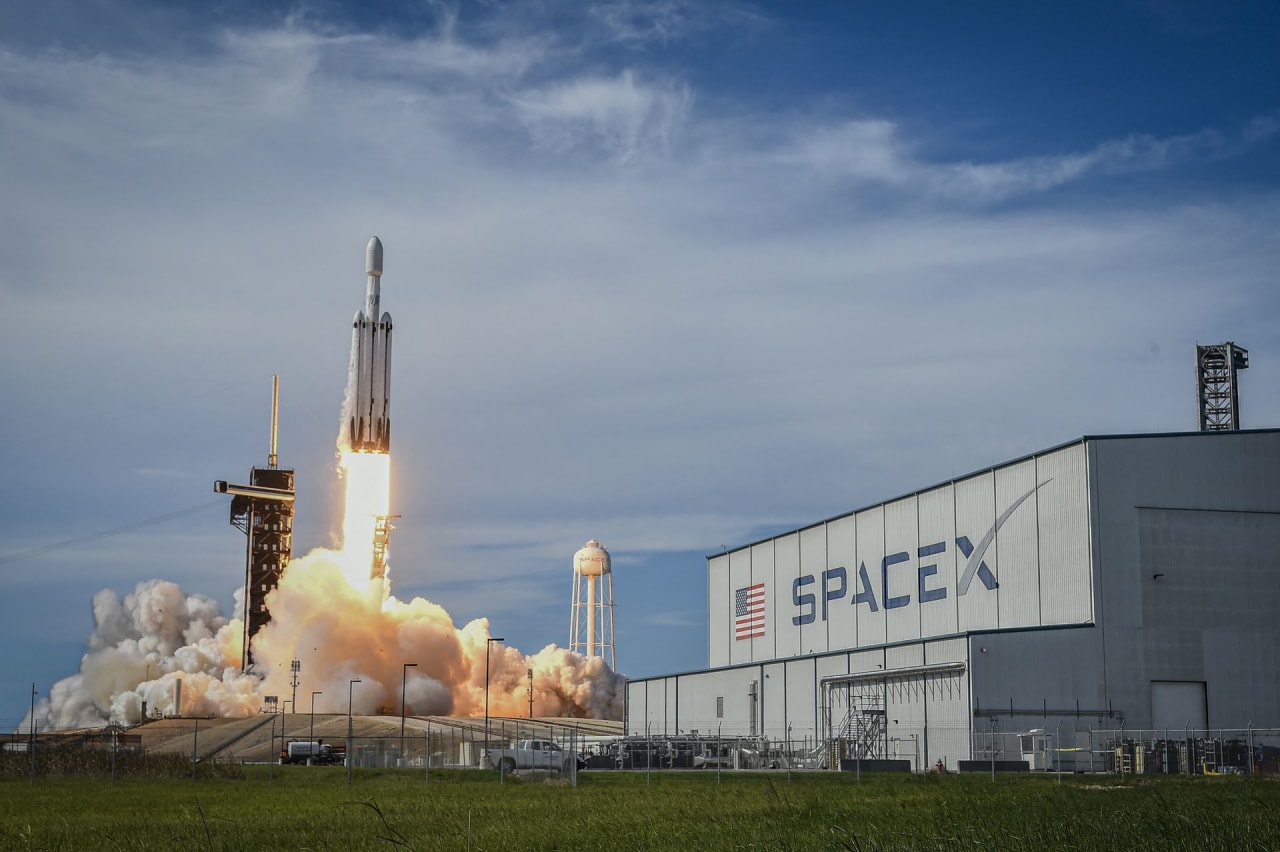
SpaceX’s long-term plans overshadow all the rest: Annually launching thousands of data centers that use up to 100 gigawatts of power. (The largest data center on Earth, owned by SpaceX, uses about 1 gigawatt of power.) The vertically integrated juggernaut has a massive edge by controlling its own rocket and satellite-manufacturing facility.
“We believe orbital AI compute is an incredibly difficult technical challenge that only we can solve at scale in the near term,” SpaceX said in its IPO prospectus .
CEO Elon Musk says SpaceX’s orbital data centers will start launching in 2027 and that the company has plans to build a network of up to 1 million orbital data centers. The satellites will be 100 feet high with a 250-foot wingspan, covered in solar panels and an 1,800-square-foot radiator with liquid cooling. For now, SpaceX is using Nvidia chips, but the space giant eventually wants to build its own chips at its Terafab facility in Texas.
AI data centers could come to dominate the payloads of its rockets, just as Starlink satellites have. In fact, SpaceX’s orbital data centers are the only payload that could even come close to creating the demand for hourly Starship launches, another of Musk’s goals.
The long list of technical challenges
Why go to space? To bypass the power and physical constraints on Earth. Sunlight is unlimited and five times more powerful in space, a big draw for power-hungry AI computing. Plus, leaving our atmosphere makes activist opposition, pollution concerns and other issues vanish.
But there’s a long list of obstacles to overcome. In addition to spaceflight vibration, radiation and extreme temperatures, the vacuum of space has no airflow, so intense heat from AI chips needs to be radiated with large metal panels. Many consider that a major challenge, but Musk isn’t fazed.
“For some reason there’s been a bizarre debate about radiators in space,” he said at a SpaceX presentation this year. “It’s safe to say, SpaceX knows how to do heat rejection in space, with 10,000 satellites in orbit.”
Orbital data centers also need to be connected to each other by high-bandwidth lasers and send data speedily back to Earth. Data delays would seriously limit the usefulness of many applications. Meanwhile, chip failures and other technical issues may have to be fixed by robots in space. And the chips will have to be replaced every 5 years or so, if not more often because of the harsh conditions.
After you solve the technical issues, the business model looks brutal when compared with traditional data centers on land. Advocates counter that they see launch costs plummeting over the next decade-plus, courtesy of SpaceX’s supersized Starship , as the chips and satellite tech drastically improve and demand for AI zooms ahead.
Google has admitted that its plans rely on SpaceX vastly driving down the cost of launching data centers. Google sees this possibly happening by 2035, if Starship takes flight nearly 200 times per year with packed payloads. And if SpaceX passes cost savings in its launches to its outside customers.
In a white paper , Starcloud argues that if launch costs fall and orbital data centers are scaled up, space systems will have lower operating costs than the hulking chip-packed facilities in Northern Virginia, Texas and elsewhere. That stems from lower energy and cooling costs, along with ditching the permitting challenges and physical constraints on land.
Breakthroughs are on the way
Expect breakthroughs in coming years, proving the tech is viable, if exceedingly costly. But don’t expect a viable alternative to traditional data centers on Earth anytime soon, even with serious power constraints and rising opposition to data centers.
SpaceX bets that a huge, profitable business emerges someday. “Over the long term, however, we expect Earth’s finite resources will not be able to sustain the immense computational demands of advanced AI models,” according to the company’s prospectus. Still, SpaceX notes the risk that even if space is commercially viable, a serious slowdown in AI’s growth could make terrestrial data centers sufficient to handle future computing needs.
If commercial customers do emerge in the 2030s, the likeliest buyers are governments and the military, which would be more willing to pay a premium for research or security.
This forecast first appeared in The Kiplinger Letter, which has been running since 1923 and is a collection of concise weekly forecasts on business and economic trends, as well as what to expect from Washington, to help you understand what’s coming up to make the most of your investments and your money. Subscribe to The Kiplinger Letter.
Related Content
Why AI Superiority is Measured in Gigawatts
The AI Bubble May Burst: 5 Ways Retirees Can Protect Their Portfolios
The Risks of an AI Bubble