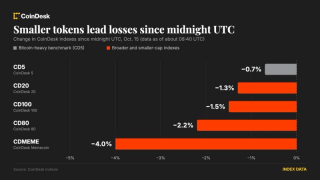
When you look at your screener and notice that Bitcoin is down 5%, you will more often than not also catch that smaller cryptocurrencies are plunging by 10% or even 20%. They are all part of the same crypto market, so it is natural to expect the direction of travel to be the same. But why is the magnitude of the moves so stark?
Well, the important difference is more in how these cryptocurrencies trade.
Just think of an example where you are trying to sell a second-hand Toyota Corolla. It’s a fairly popular car, so chances are you’ll easily find someone willing to buy it without having to knock too much your asking price.
But now, imagine that you are trying to sell a heavily customised sports car instead. Sure, the car is worth more than the Toyota Corolla and by quite a fair bit for sure. But then, how many people are actually to buy that exact car with such a niche set of specifications? Probably not very many. And if there is a sudden need to sell the car by tomorrow, you might very well have to let it go at a hefty discount in order to find someone that might be interested in buying.
So, how does this tie back to the crypto market?
With Bitcoin, there’s generally a much bigger crowd of people looking to buy and sell. So even when investors start selling, there’s a better chance of finding someone who would be willing to buy at a price close to the current market value.
As for smaller altcoins, it isn’t quite the same story. Just imagine everyone suddenly trying to sell their heavily customised sports cars at the same time, only to realise that there aren’t nearly enough interested buyers around. So, what happens next? Sellers will then have to lower their prices to attract buyers and the more desperate they become, the bigger those discounts might get.
And that is essentially what traders mean by liquidity. The easier it is to find a buyer without having to offer a hefty discount, the more liquid the market is.
Then, there’s also the concept of market depth. Just imagine trying to sell an altcoin at $10, but there are only so many buyers at that price to purchase a few coins. The next set of buyers might only be willing to pay $9.50, while others are waiting at $9 to get in on the action. So if enough investors are rushing to sell, the price has to keep dropping to find willing buyers.
And if that wasn’t bad enough, some traders are also betting on these cryptocurrencies using borrowed money. So when prices fall too drastically, their exchanges may automatically sell their holdings to prevent further losses. That is what we call forced liquidation. And when those automatic sales start piling up, they can push prices even lower and lead to yet another round of selling. In essence, one price drop triggers another and that turns a relatively ordinary selloff into something much more painful.
So the next time you see Bitcoin falling by 5% while your favourite altcoin tumbles by 15%, don’t just assume that something terrible has happened to the smaller cryptocurrency. Sometimes, it is just simply a case of too many sellers chasing too few buyers.
This article was written by Justin Low at investinglive.com.