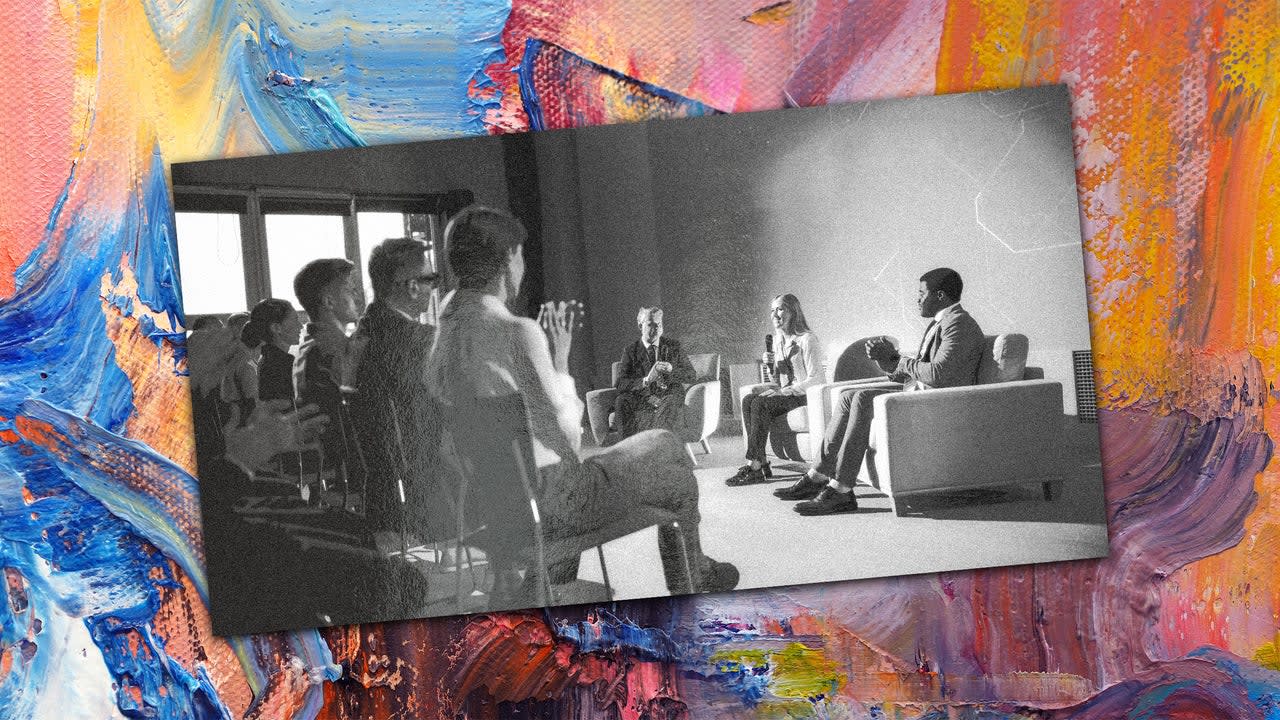

Suppose you are called upon to organize a panel discussion. The task may look easy. But if you’re not careful, you might end up overseeing a boring multispeaker event or a free-for-all where panelists interrupt each other and talk at cross-purposes.
It is up to you to make this format work and create a coherent, engaging session. But how? Follow the steps below and you’ll bring order to the panel, inspire listeners, and create an exciting event.
1. Choose Speakers
Your first task is to select the speakers. Choose people who are knowledgeable and bring different perspectives.
Suppose your topic is “AI in our company.” You might select panelists who show how artificial intelligence is being used creatively in a variety of disciplines in the company. One speaker might discuss how AI is improving the hiring process. Another might discuss how AI is helping leaders. To make things interesting, include a naysayer, someone who says AI is a hazard to achieving the company’s goals.
2. Brief the Speakers
Let the presenters know why they’ve been chosen and what they should focus on. Tell them who the other speakers are and what perspective they might bring.
Suppose the topic is “What Makes a Good Leader.” Suggest that each speaker focuses on a quality they feel is critical to effective leadership, such as charisma or emotional intelligence. Make sure your request is a good fit for each of them.
Tell presenters how long they will have to speak and if there will be an audience Q&A. That will allow them to prepare appropriate talking points. Make clear that the time limits are more than suggestions. They are needed so the event goes smoothly.
3. Moderate the Event
Your role will likely include moderating the event.
Open the session with a brief overview of the topic, its importance, and the range of perspectives that will be covered. Your opening will help listeners better understand the discussion—and why this panel is important.
Introduce each speaker. It’s best to do this when that individual is about to present, rather than introducing everyone at the start. In your introductions you can suggest how a person’s presentation relates to the larger themes. That underscores the coherence of the overall panel. You want to avoid the disaster of disconnected speeches.
When the last speaker has concluded and you have thanked all the panelists and provided a brief summary, invite questions from the audience if the format of your event permits. This is an exciting part of the event, so save plenty of time for Q&A.
It is likely that the questions will be targeted to particular speakers. If not, you choose the best candidate to answer that question.
Always prepare some questions yourself. That’s particularly useful if there are few from the audience or if you feel an important area has been neglected.
Throughout the panel discussion keep the tone enjoyable. The best events are lively and full of fun and laughter.
4. Conclude the Event
Conclude by summing up what the audience can take away from the panel and what the overall message is.
Thank the audience for coming and conclude with a call to action that suggests how the audience can act upon the knowledge it has gained.