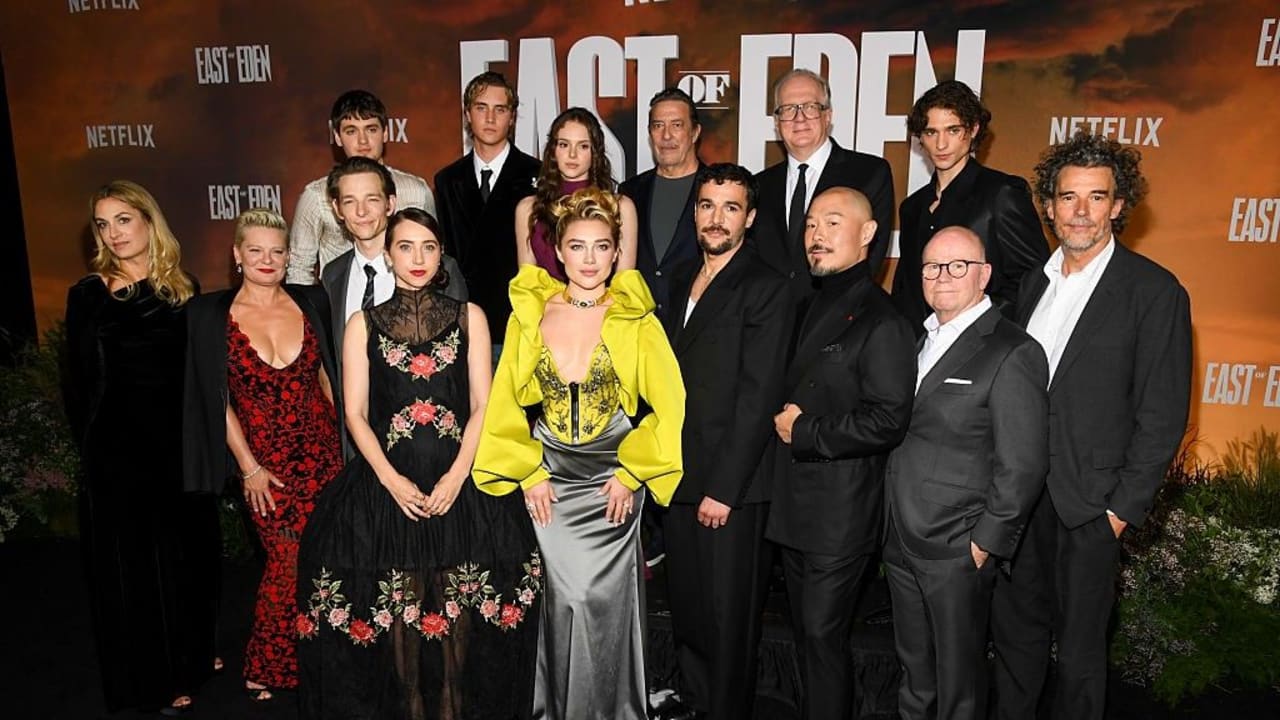

“Perhaps it takes courage to raise children,” John Steinbeck wrote in 1952’s East of Eden . The American classic has a lot to say about parenting — and a lot to say about how money can twist relationships within families, despite good intentions.
Without giving away spoilers, I’ll just say that East of Eden is ultimately a story about what we do and do not inherit from our parents. Because of that, with a new adaptation of the Cain-and-Abel tale now available to stream on Netflix , we partnered with our sister site CinemaBlend to ask some cast members about handling inheritances.
CinemaBlend sat down with actors Hoon Lee, Joseph Zada and Joe Anders. The latter two play brothers Cal and Aron, the younger generation of the story. Where Aron (Anders) is kind and trusting, Cal (Zada) is scheming and suspicious. To put it another way, a Kiplinger-Morning Consult survey found that 33% of adult children expect an inheritance will create conflict with their siblings: Cal and Aron are the types of squabbling siblings trusts and professional executors were created for in estate planning.
CinemaBlend asked Anders and Zada what they think would’ve happened if their characters’ parents passed their businesses down to the brothers to run.
“I think I would’ve killed that,” Zada said, in characteristically Cal fashion.
Turning to his onscreen brother, he said, “I don’t know about you, dude. You’re a little all over the place. I think you really wouldn’t have done very well. You would’ve thought that you would’ve done great.”
“Aron would’ve been totally convinced he was doing amazingly,” Anders agreed. “And then I think he would’ve had a wake-up call at some point.”
The ‘wake-up call’ of inheritance
There’s a lot of confidence when it comes to inheritance. Our survey found that 70% of adult children feel confident in their ability to manage an inheritance.
But expectations and confidence don’t always align with reality. Eight percent of adult children said they believe their parents’ estate includes business assets — but only 2% of parents said business assets were in their estate. On the flip side, 54% of parents said real estate, including their home, is part of their estate — but only 32% of the younger generation said the same. These differences demonstrate the lack of understanding adult children have about what they may inherit, and those surprises could lead to, as Anders put it, shocking “wake-up calls” about how prepared you actually are.
(Image credit: Rob Kim/WireImage via Getty Images)
“Confidence and competence are different things,” Valerie Galinskaya , managing director and head of the Merrill Center for Family Wealth®, told me in our Kiplinger Conversation about inheritance . That’s why it’s important for parents to have open and honest conversations about their estate with their children (although, well, Aron and Cal may not have wanted to hear all about it from their mother).
By having these conversations, and especially by having these conversations throughout life stages from a young age , parents can better ensure that their legacy won’t be squandered by overconfident and underprepared children. They can help their children know what to be ready for and how to manage certain money challenges.
When we asked adult children in our survey what they’d want to use an expected inheritance for, one respondent said, “I hope to use it to get a nice family business going for our future generations.”
It’s a lofty idea to start a business you hope to be a family legacy, but as each generation steps up with their own hopes, dreams and, let’s face it, faults, it’s not a given that even a successful business will survive a second generation. It’s often not enough to simply build an estate; you also have to educate your children to be capable of managing it.
Because while it may seem like a gift to leave an inheritance, East of Eden is a prime example of how it can all go terribly wrong.
Related Content
Don’t Wait Until They’re Adults: How to Build Your Kids’ Money Habits Before Passing Down an Inheritance
We Know You’d Rather Talk to Your Kids About Politics Than Inheritance. Here’s the Right Way to Have That Conversation Anyway.
How to Organize Your Financial Paperwork for Your Heirs