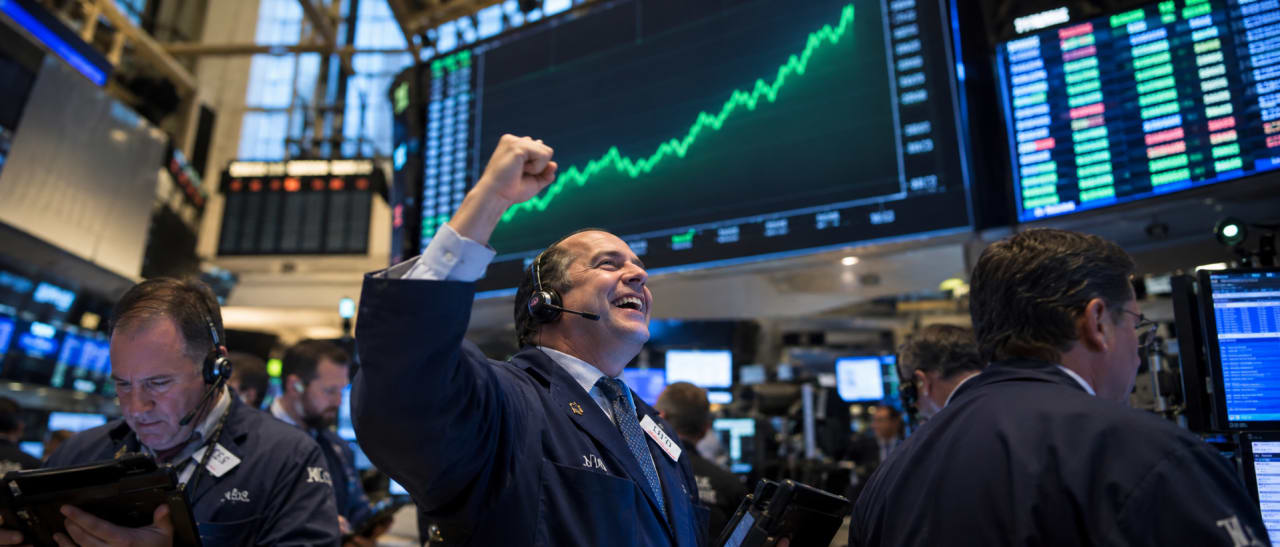

US stocks ended mostly higher on Thursday as investors shifted away from some artificial intelligence-related stocks and into healthcare, consumer, and other defensive sectors amid concerns about elevated borrowing costs and persistent inflation.
The Dow Jones Industrial Average gained 556 points, or 1.08%, while the S&P 500 rose 0.33%.
The Nasdaq Composite added 0.08% as weakness in semiconductor stocks limited gains in technology shares.
Investors assessed September producer price data showing the strongest annual wholesale inflation increase since December 2022.
The figures followed hotter-than-expected consumer inflation data released on Wednesday, strengthening concerns that the Federal Reserve could raise interest rates again before the end of the year.
Dow leads gains as investors favour defensive stocks
Healthcare and consumer companies supported the broader market, with Eli Lilly, UnitedHealth and Walmart gaining following rating upgrades from Deutsche Bank.
Walmart shares climbed nearly 2%, while Nike advanced more than 5%.
The gains reflected a shift towards companies outside the technology sector as investors reassessed the risks associated with expensive AI infrastructure investments and higher financing costs.
The S&P 500 remains up approximately 13% in 2026 after reaching a record high last week, with much of its advance driven by AI-related stocks.
However, the index was trading at around 19 times expected earnings, its lowest valuation level since 2023, according to the supplied report.
The change in market leadership came as Treasury yields remained near multiyear highs despite retreating on Thursday.
The 10-year Treasury yield has been a focus for investors concerned that persistent inflation and elevated oil prices could keep borrowing costs high.
Higher financing costs could affect businesses across the economy, including companies investing heavily in data centres and AI infrastructure.
Semiconductor stocks extend losses amid AI concerns
Technology stocks remained under pressure as investors scrutinised AI companies with substantial debt obligations and questioned whether the sector’s growth expectations were sustainable.
The Philadelphia Semiconductor Index fell for a seventh consecutive session.
Broadcom and Nvidia declined after Taiwan Semiconductor Manufacturing Company (TSMC) expressed caution about its outlook for 2027, despite reporting a sixth consecutive quarter of record profits supported by AI demand.
Dell Technologies and Hewlett Packard Enterprise also remained under pressure following the previous session’s losses linked to concerns about borrowing costs.
Memory-related stocks faced additional headwinds from worries about a potential supply glut and increasing competition from China.
Seagate Technology, Western Digital and SK Hynix extended their declines during the week.
Anthropic’s latest revenue figures added to questions about the pace of AI growth.
The Claude developer generated $16.8 billion in third-quarter revenue , although the increase from the previous quarter was slower than its earlier expansion.
Not all AI-related stocks declined.
CoreWeave gained around 3%, recovering from a fall of more than 15% in the previous session, while Micron Technology rebounded from earlier losses to finish nearly 1% higher.
Inflation data raises Fed rate hike expectations
US producer prices rose 1.3% month over month and 6.3% year over year in September, marking the largest annual increase since December 2022.
The figures exceeded economists’ expectations and indicated that inflationary pressures were spreading across goods and services.
The report followed September consumer price data that also came in hotter than expected, increasing concerns that the Federal Reserve might need to tighten monetary policy further.
According to CME FedWatch data, traders priced in a 67% probability of a rate increase by the Fed’s December meeting, up from 62% on Wednesday.
Elsewhere, Rocket Lab shares fell after the company delayed the first launch of its larger Neutron rocket until next year. FMC also tumbled after sharply reducing its third-quarter outlook.
The post Dow rises 556 points as investors rotate out of AI stocks on inflation fears appeared first on Invezz